Life in Damstredet…
leaden skies, and Friday cocktails in HIMKOK
Leica M6, 35mm Summicron F2
Damstredet, Oslo: A Crooked Little Mausoleum of the Twee
There exists a particular species of travel writer — moist of eye, soft of skull, the prose equivalent of a damp flannel — who reaches for the word charming the way a vet reaches for the captive-bolt pistol: swiftly, mercifully, and to render the subject permanently incapable of independent thought. Damstredet is where this breed comes to spawn in Norge. It is a short, buckled gulley of timber houses, wedged into the upholstered hush of central Oslo like a rotten tooth in an otherwise sedated mouth, and it has been "charmed" so thoroughly, by so many lanyard-wearing pilgrims, that the street now lies there twitching, unable to defend itself.
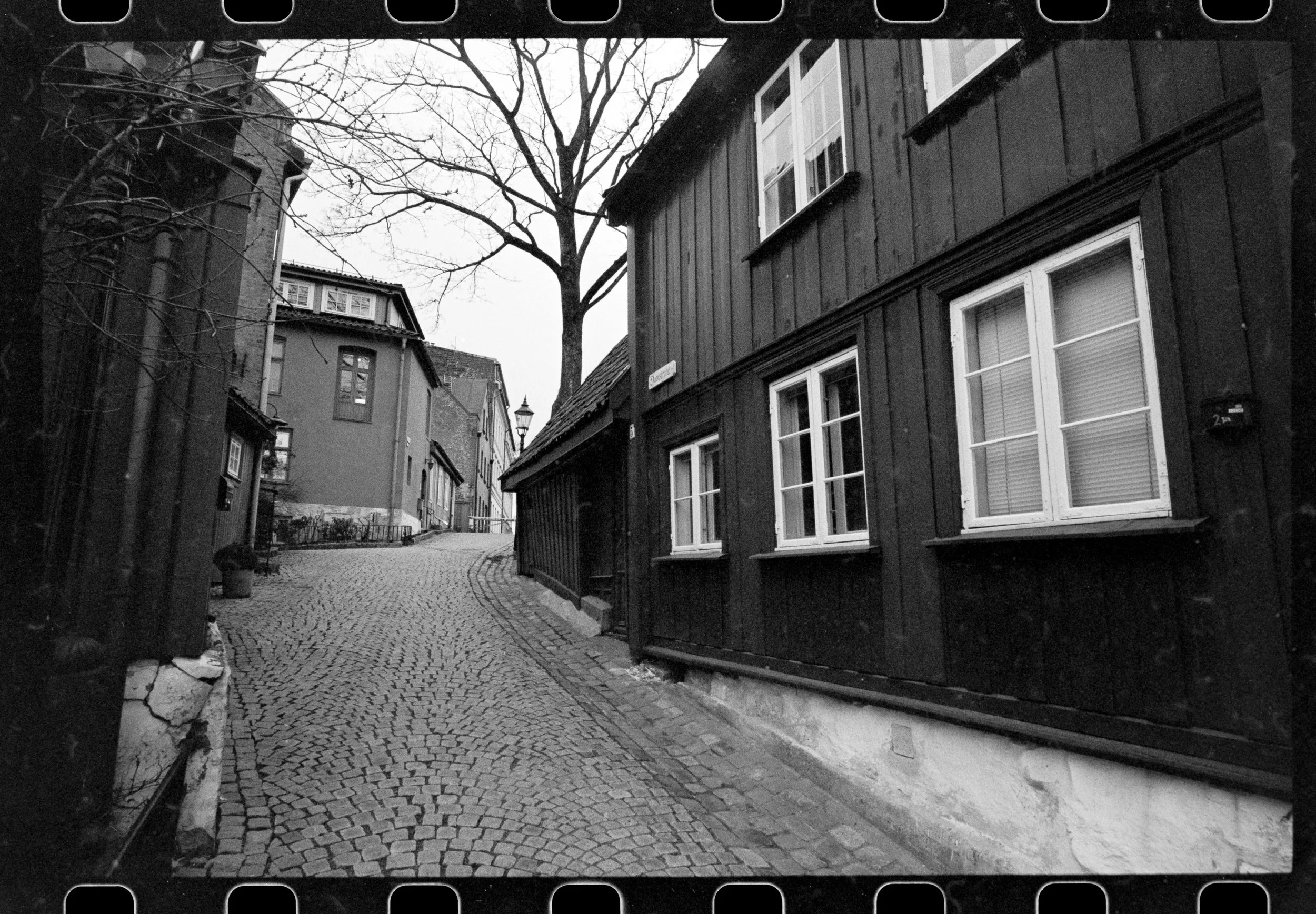
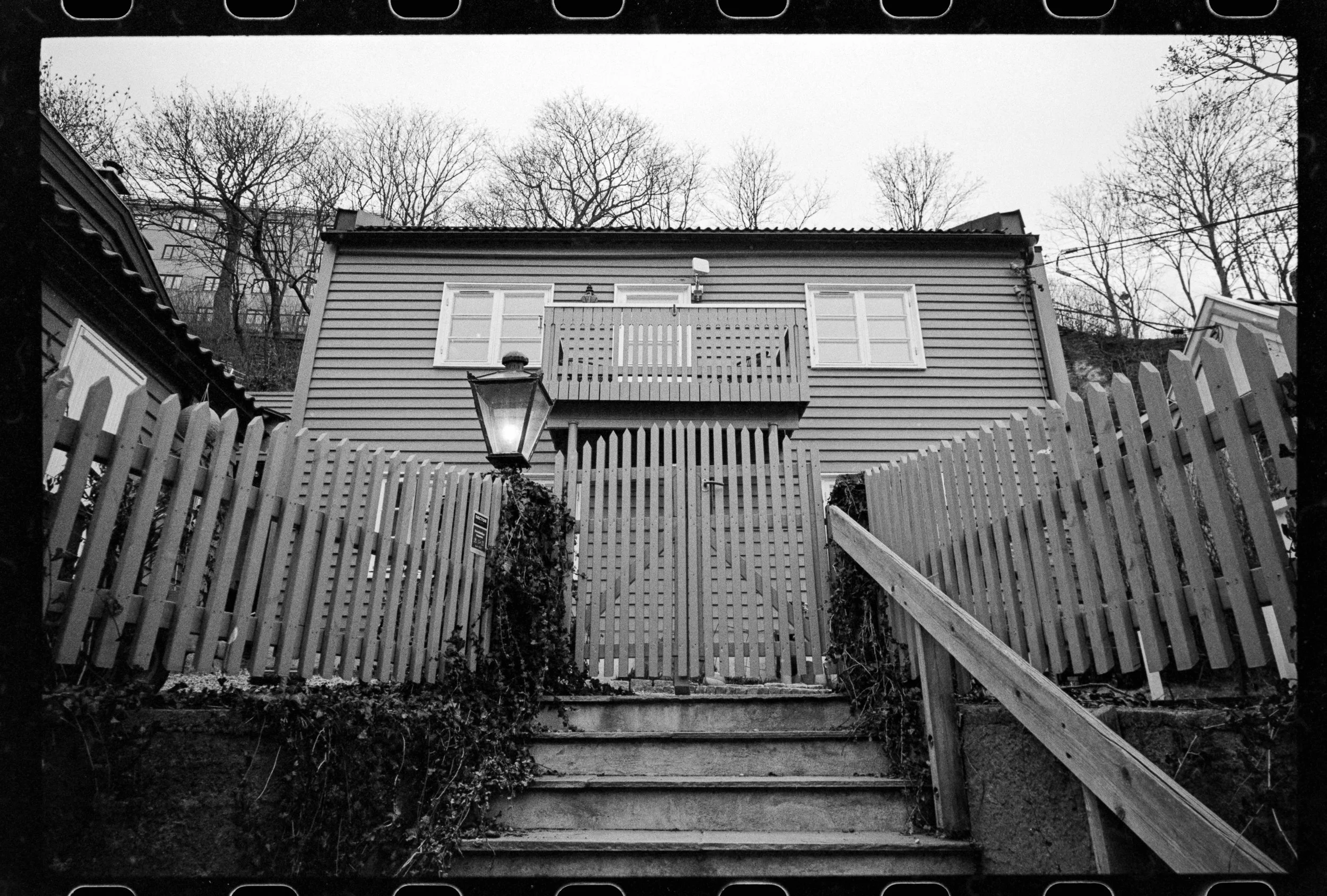
Let me describe it, since the guidebooks won't, being too busy weeping into their own pull-quotes. Picture a clutch of wooden cottages, painted in the colours of recovering jaundice and a bruise going green at the edges, leaning into one another like commuters who have fallen asleep on the last tram and are now slowly, tenderly, dribbling onto a stranger's shoulder. Not one wall is vertical. Not one window agrees with its neighbour. The whole arrangement has the structural confidence of a Finn who has had eleven aquavits and is explaining to you, at length, why he is fine to drive. This, apparently, is the appeal. We are meant to coo. We are meant to murmur they don't build them like this any more, conveniently forgetting that they don't build them like this any more for the excellent reason that gravity exists and lodges complaints.
The cobbles were clearly laid by a man who hated feet, and possibly the people attached to them. To walk up Damstredet is to perform an unpaid ankle-stress test on behalf of the Norwegian heritage industry, lurching from stone to malevolent stone while a small, cheerful sign informs you that this is one of the oldest preserved streets in the city — preserved, one assumes, in the same loving spirit as a wasp in amber, or a saint's withered finger, things best admired through glass and at speed. On speed.
And the photographers. Dear God, the photographers. They arrive in phalanxes, swaddled in technical outerwear, each one convinced that no human retina has ever before been graced by the sight of a wonky ochre door, and that the world has been holding its breath these four hundred years awaiting their particular fourteen near-identical exposures of it. They crouch. They tiptoe into the road. They ask their partners to stand "just there, no, there, NO, by the geraniums" with the quiet desperation of hostage negotiators, and the resulting image — destined for an audience of forty-one and one disappointed aunt — will be indistinguishable from the eleven million already in existence. The street does not photograph badly. That is its only crime, and it is being made to pay for it eternally, like a beautiful woman trapped at a party full of estate agents.
Looming above the whole sorry pantomime sits Gamle Aker church, stone-built, austere, and pointedly upright — the one structure in the vicinity granted permission to stand at ninety degrees to the earth, gazing down on the leaning timber rabble below with the weary disapproval of a headmistress watching the lower fourth attempt synchronised swimming in a puddle.
I will say this for Damstredet: it is brief. Mercifully, almost apologetically brief. You may "do" it in the time it takes to lose the will to live, which is roughly the time it takes a fellow tourist to ask you, brightly, whether you've also been to Telthusbakken, the next street of crooked wooden houses, because Oslo, having discovered one thing that delights the lanyards, has sensibly decided to keep doing it until somebody dies.
Go, by all means. Stand on the sadist's cobbles. Admire the brave municipal commitment to keeping a row of glorified sheds upright by what appears to be willpower and Nordic stubbornness alone. Take your photograph. And then, having paid your respects to the corpse, climb back down into the real Oslo, where the buildings stand up straight, the floors are level, and no one will ask you to feel anything whatsoever.
Verdict: Quaint, in the medical sense.