A Photographic Friendship
James Ravilious and Chris Chapman at the Burton in Bideford
August ‘26
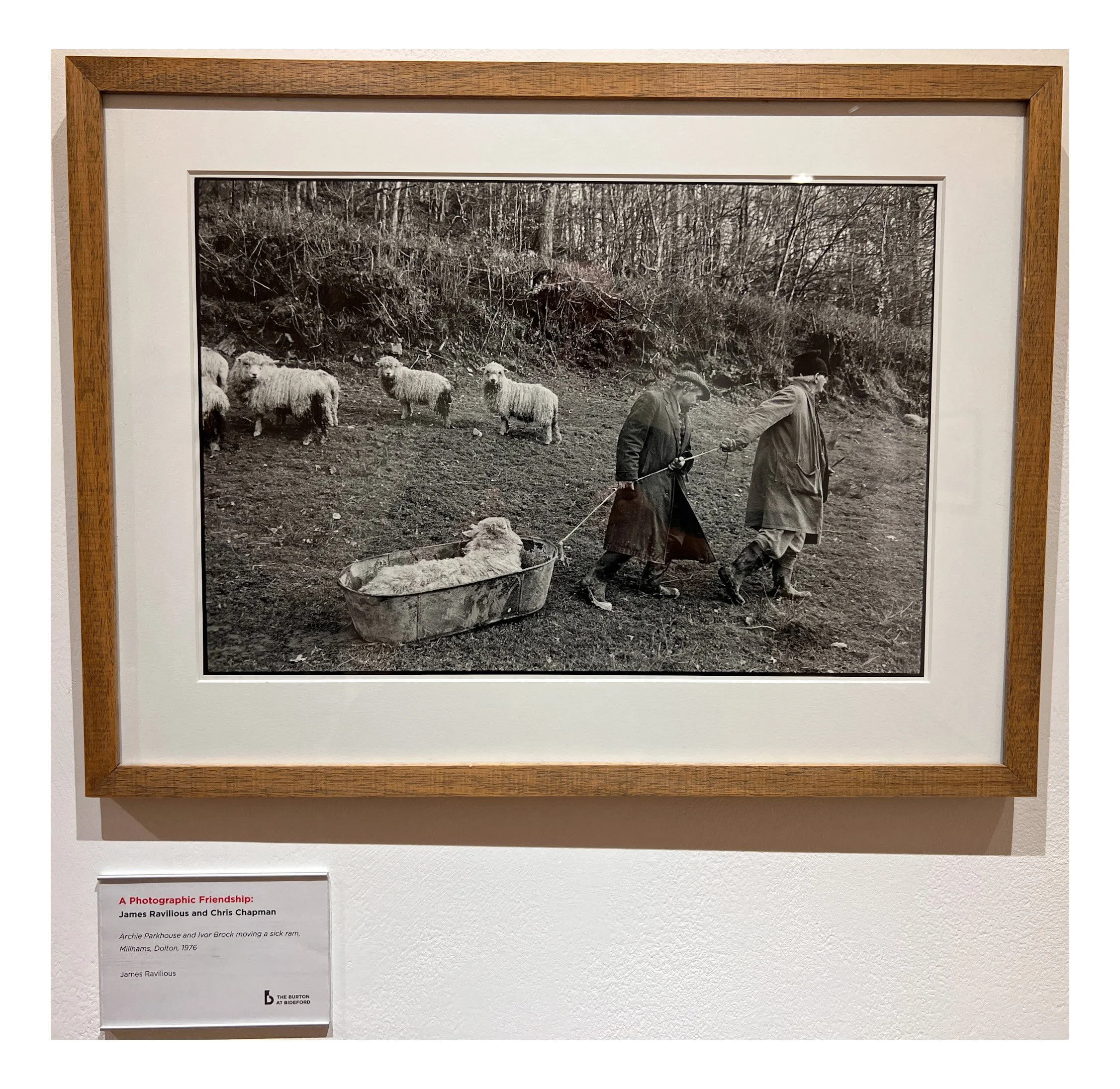
Archie Parkhouse and Ivor Brock Moving a Sick Ram, Millhams, Dolton, 1976

Two men in overcoats of the sort that have long since given up any pretence of shape, hauling on a single length of rope, and at the end of it a sick ram being dragged across a muddy Devon field in an old, galvanised tin bath. A tin bath! One imagines the committee meeting that produced this solution, and then one realises there wasn’t one, because in 1976 in Dolton you simply looked at the problem, looked at the bath, and got on with it. What makes the picture rather than merely records it is the flock along the hedge bank behind, watching with the profound indifference that sheep have refined over ten thousand years. There is no drama and no staging here; Ravilious was standing in the right field with a Leica and the patience to wait. The V&A has a print, catalogued with commendable brevity as The Sick Ram, and the location is given there as Addisford rather than Millhams, which is worth knowing if you’re ever captioning it for anyone fussy.

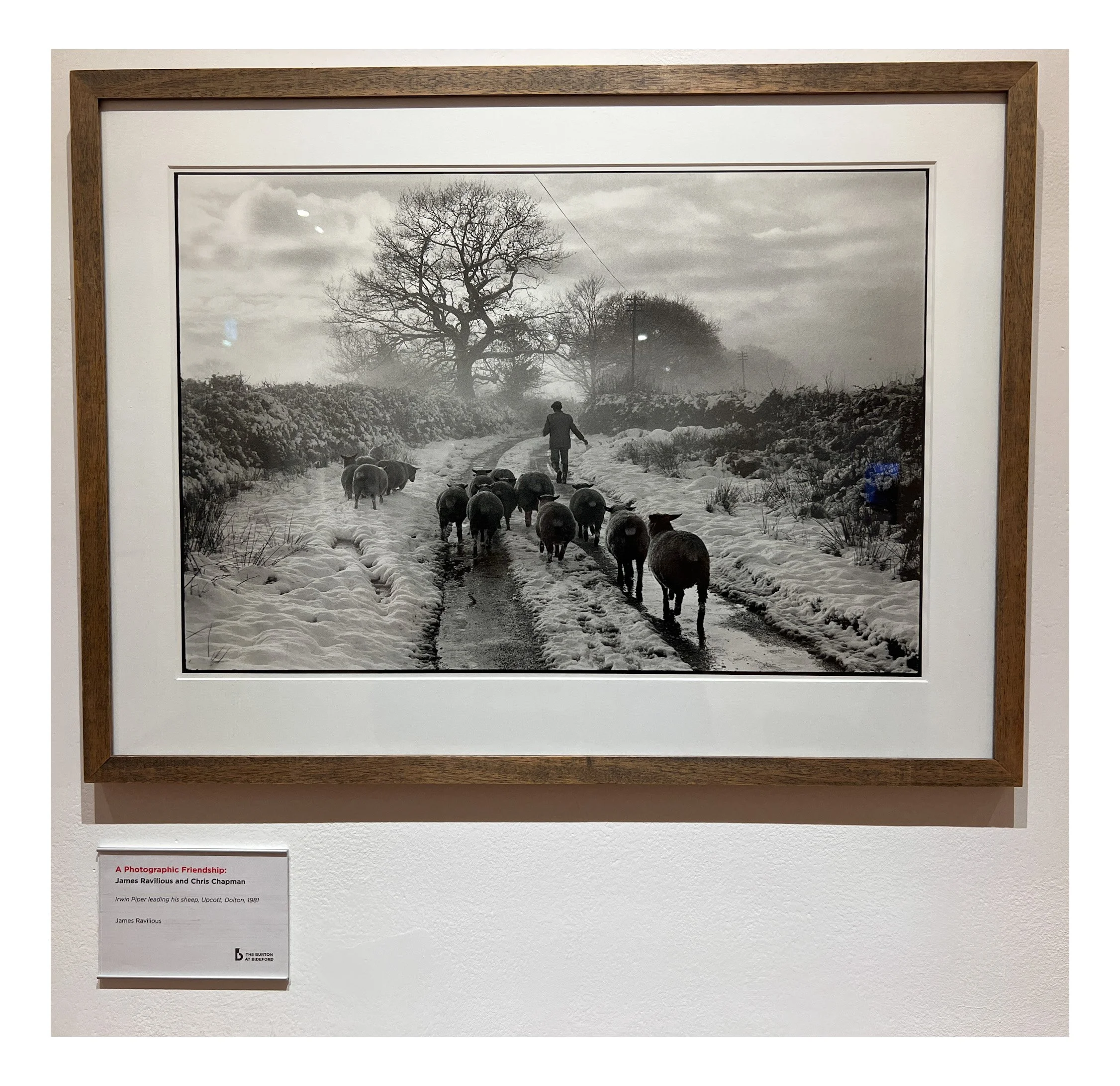
Irwin Piper leading his sheep, Upcott, Dolton, 1981

This is the one people fall in love with and then feel slightly ambushed by. A man leading his flock down a snowy, high-banked, wooded lane in November light, an image so timeless that a contemporary critic noted it could have been taken at the beginning of the century. Everything in it says continuity, endurance, the deep unhurried rhythm of the agricultural year. And then you look up the title in the Beaford Archive and find that Ravilious called it Irwin Piper taking his sheep for slaughter, at which point the whole lovely thing rotates about forty degrees on its axis. That gap between what the picture looks like and what the picture is doing is precisely why Ravilious survives the “charming rural nostalgia” shelf he keeps getting filed on. He was never sentimental about where the sheep were going.


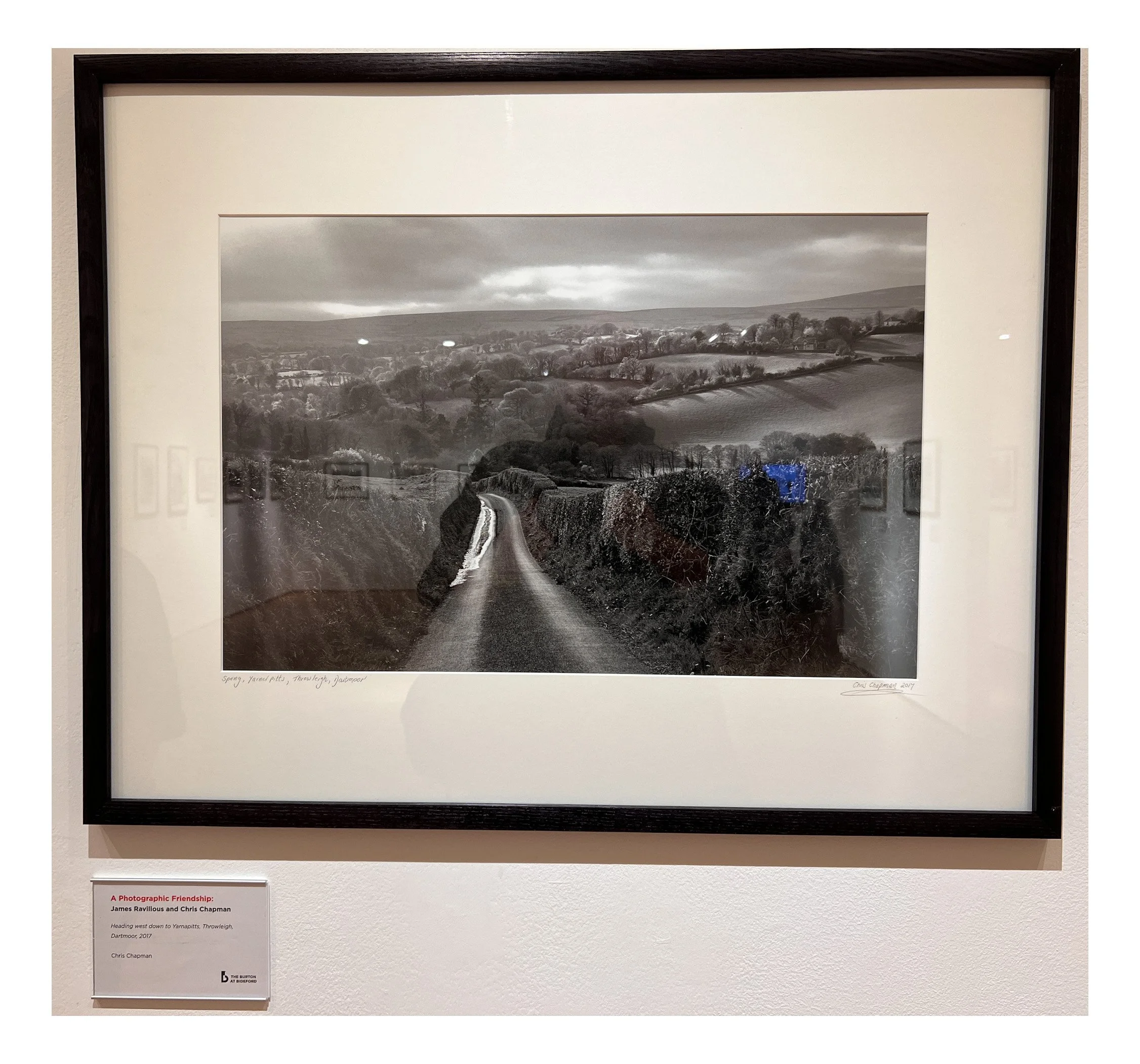
Heading west down to Yarnapitts, Throwleigh, Dartmoor, 2017 — Chris Chapman

A single-track lane drops away from your feet, wet tarmac shining like a strip of pewter, and runs off downhill between hedge-banks so high and so shaggy that they might have been left there by a glacier and simply never tidied. Beyond it the land opens into that ludicrous Devon patchwork of tiny fields, hedge upon hedge, scattered trees standing about in their winter frost like people waiting for a bus, a whitewashed farmhouse or two, and then the moor itself lying flat and grey along the horizon under a great lid of cloud with one bright seam torn in it. And here is the thing that makes it a Chapman rather than a calendar: the lane is empty. Ravilious would have put Archie Parkhouse and a rope in it, or Irwin Piper and forty sheep. Chapman photographs the same kind of high-banked lane forty years later and there is nobody on it at all, which is either a statement about rural depopulation or simply what happens if you stand outside in Throwleigh at dusk in March, and I suspect he’d be perfectly happy for you to take it either way.  Chapman’s own pencil inscription along the bottom of the mount reads “Spring