Canon L2
A Simple Analogue
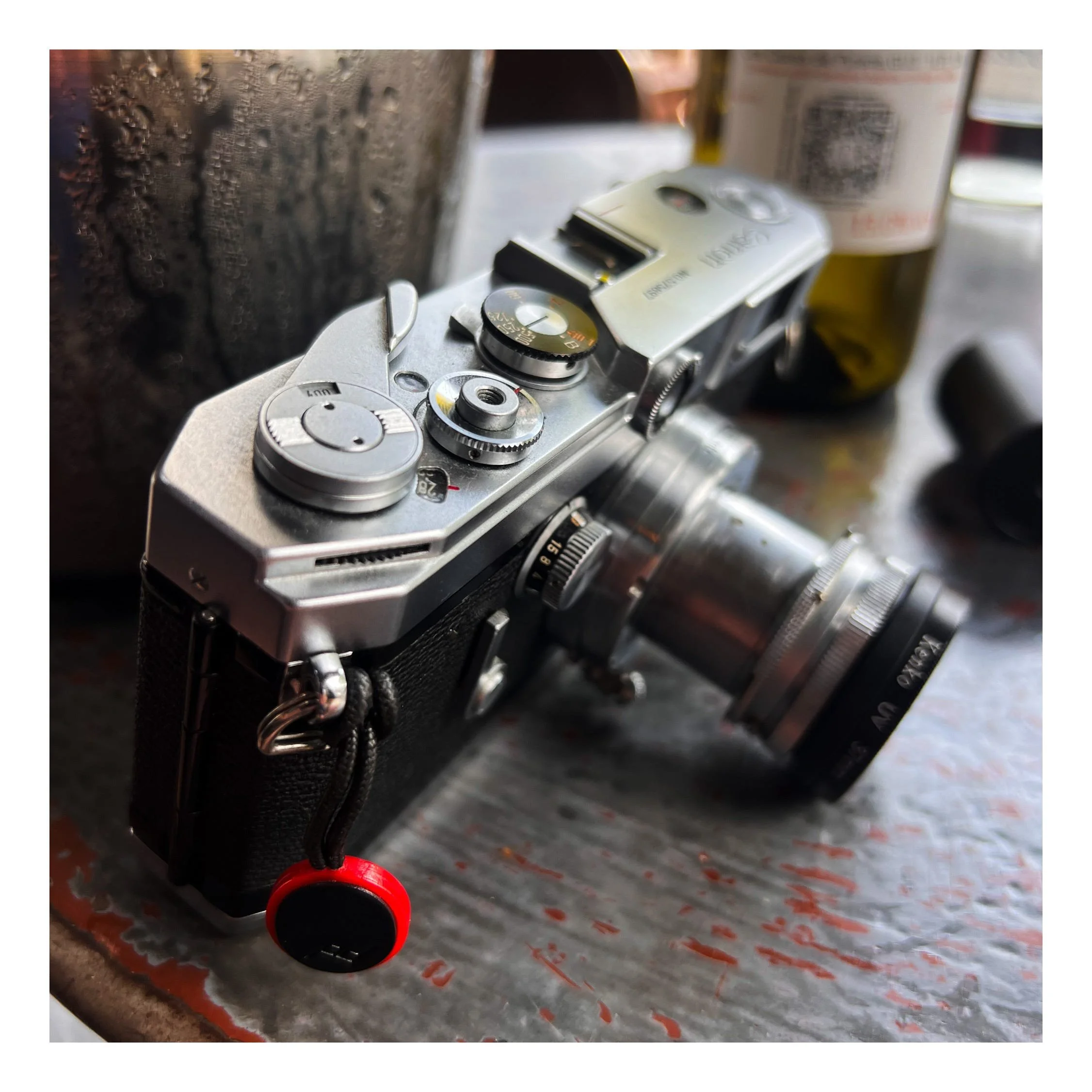
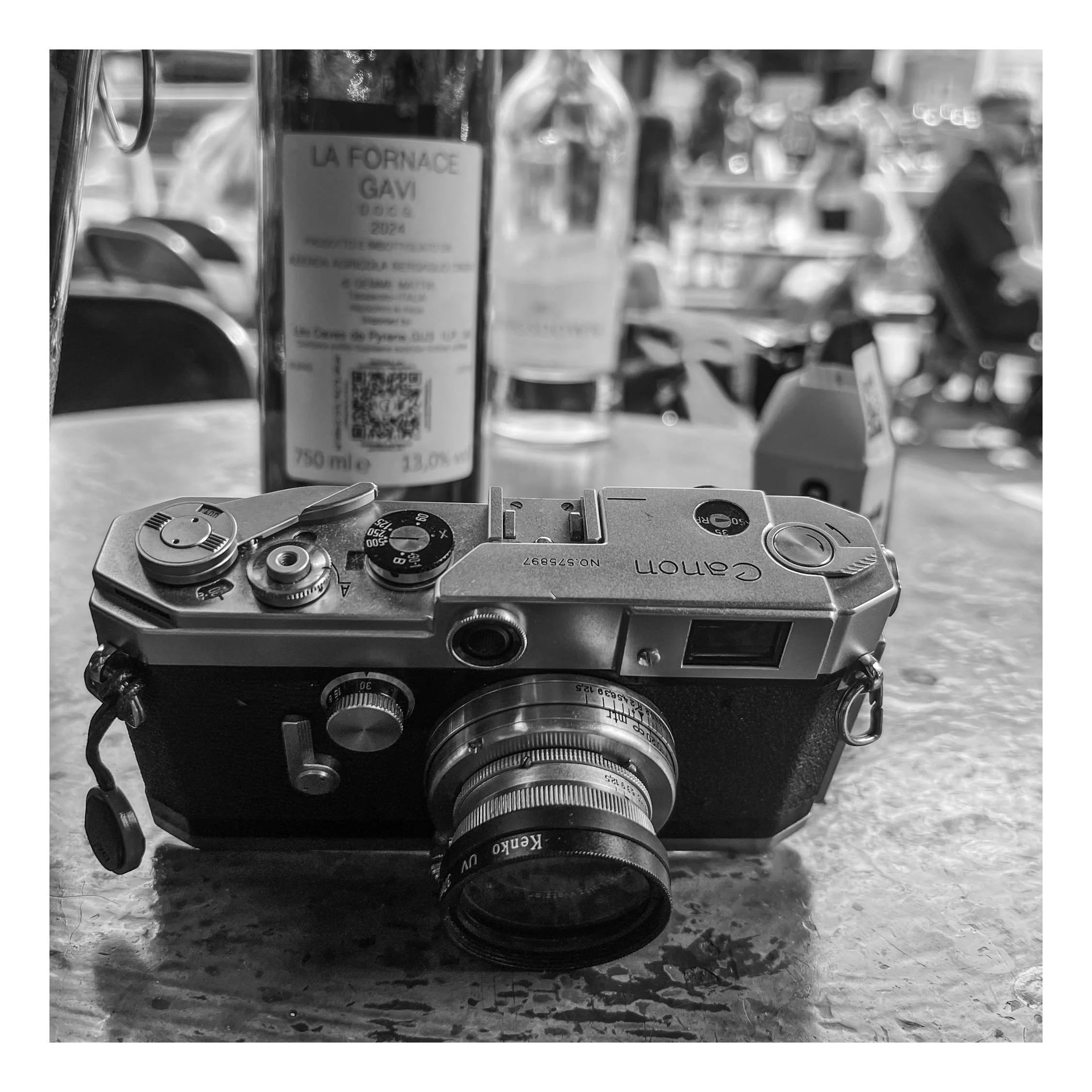
There is a certain kind of Englishman — and I say this with affection, having spent half my life trying to emulate one — who believes that no pint can be properly enjoyed unless it is accompanied by a piece of machinery older than Kate Adie . I found myself among them on the terrace of the Westbourne in Notting Hill, clutching a Canon L2, a rangefinder made in 1956 by people who evidently believed that a camera should weigh roughly the same as a well-fed cat and be constructed to survive being dropped from a moving train. It is a wonderful thing, the L2. It has no light meter, no automation, no opinions of its own whatsoever, which makes it rather like drinking with a very agreeable but entirely silent companion.
Screwed into the front of it was my collapsible Leica Elmar, a lens with the endearing party trick of retracting into the camera body like a tortoise that has seen something alarming. This is genuinely useful, in that the whole apparatus slips into a large jacket pocket, and genuinely perilous, in that you will at some point attempt to take a photograph with the lens still collapsed and produce an image resembling a fog bank photographed through a bathroom window in winter. I did this twice. The gentleman at the next table, who had been watching me with the patient interest the British reserve for someone about to make a fool of himself, seemed quietly satisfied.
But when you pull the little chap out and lock him into position — and there is a satisfying brass click that no modern camera has ever bothered to replicate — something rather magical happens. The Elmar renders sunlight the way you remember it rather than the way it actually is. The Westbourne’s terrace, which on this particular afternoon was a heaving mass of unstructured pink linen, spaniels, and people discussing house prices with the intensity of hostage negotiators, came out on Portra looking like a scene from a gentler, more golden decade. The f/3.5 maximum aperture is, admittedly, not fast. Neither am I. We got along famously.
The rangefinder patch on the L2 is bright and decisive, the shutter fires with a discreet snick rather than the door-slam of an SLR, and nobody on the terrace so much as glanced up as I photographed them — which is either a tribute to the camera’s unobtrusiveness or evidence that Notting Hill residents have trained themselves not to acknowledge anything that isn’t a Land Rover or carrying a Glock. Guessing exposure by the Sunny 16 rule while holding a pint requires a level of coordination I possess for approximately one drink, after which the negatives develop a certain impressionistic quality. But that, I think, is rather the point. The L2 and the collapsible Elmar do not take pictures of an afternoon; they take pictures of how you’ll want to remember it, which on a sunny terrace with a good pint is a far more valuable service altogether