

Process Supplies, Clerkenwell
Process Supplies at 98 Years, Mount Pleasant, Clerkenwell
There are, I have come to believe, two kinds of shop in Britain: the kind that wants your money, and the kind that will take it if you insist but would much rather you understood what you were buying. Process Supplies is firmly the second kind. It sits on Mount Pleasant, a street whose name must have been chosen by someone who had never seen it, across from the vast Royal Mail sorting office, which has all the charm of a municipal swimming baths built for giants. You would walk past it without a second glance, and for nearly a century a great many people apparently have, which is a shame for them and a relief for the rest of us, who like being able to get to the counter.
The first thing to understand is that Process Supplies has been here since 1928, and has been run by the same family, the Willes, more or less ever since. It began by supplying glass plates and chemicals to the printers who once filled Clerkenwell. When they drifted away it quietly switched to photography, the way a sensible pub landlord switches to serving food. The result is a shop that seems to extend indefinitely downwards into the basements, where I like to imagine there are still crates of things nobody has asked for since the Attlee government. You come in wanting a box of Foma paper and a bottle of fixer. You leave with those, plus a small brown jar of something for cyanotypes that you were assured is perfectly legal and that you now keep in the shed, well away from the cat.
If I have one complaint, and I'm London enough now to feel I ought to have at least one, it's that the place isn't always what a management consultant would call "optimised." But nobody goes to Process Supplies for optimisation. They go because it's one of the last places in the country that can still lay its hands on the raw chemistry for alternative processes, and because the people behind the counter know things about developers that ought to be taught in schools. In an age when most shopping involves arguing with a website about why your parcel is in Kettering, there is something deeply consoling about a shop that still smells faintly of the nineteenth century and doesn't mind at all.
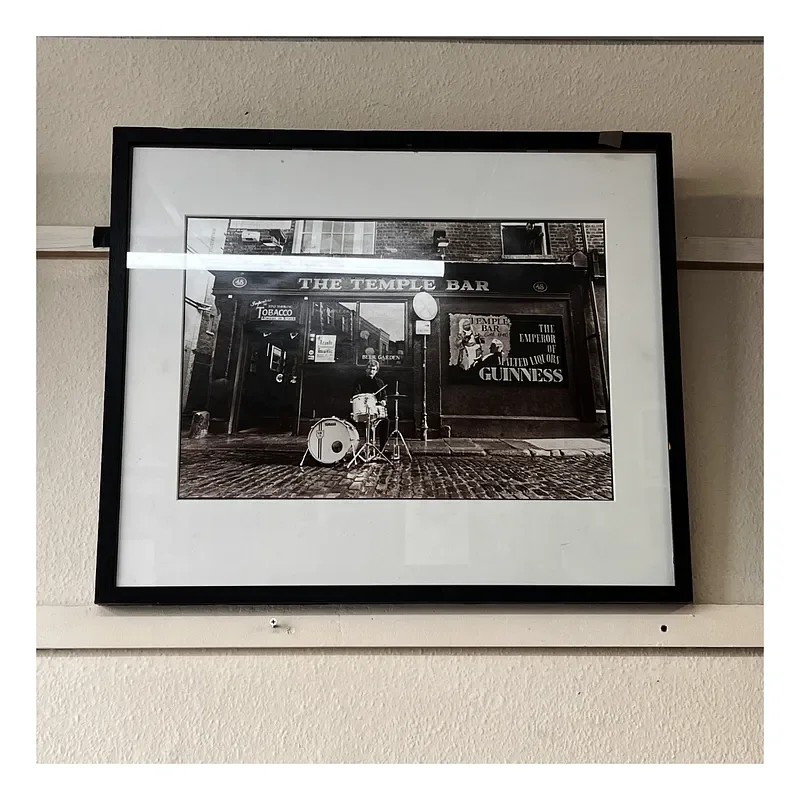
Black and white photo of a street scene in front of The Temple Bar pub, showing a man playing drums and a drum set on the sidewalk, with pub signage and posters in the background.
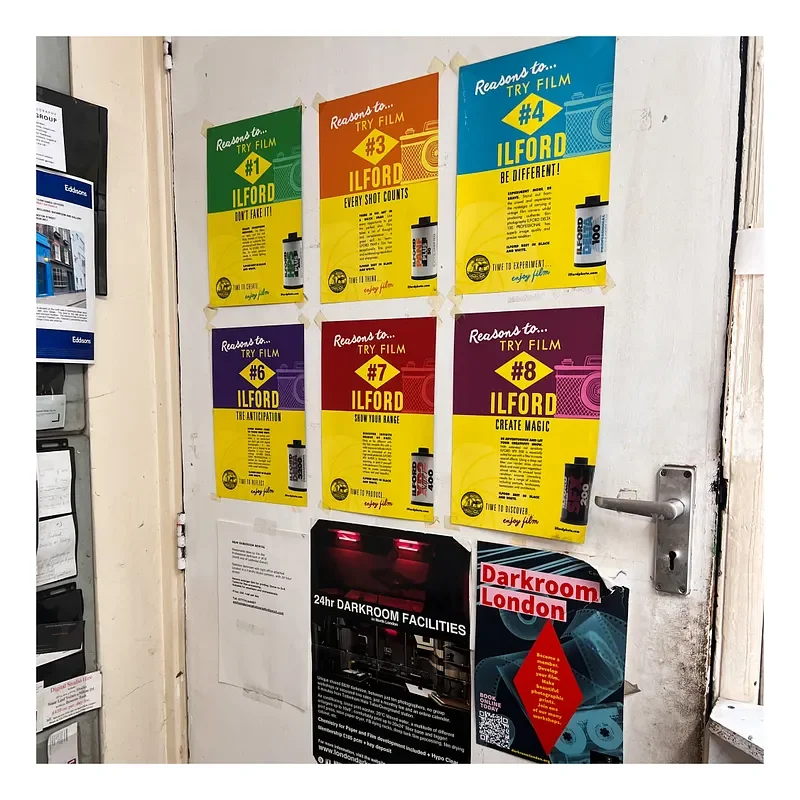
Colorful posters on a wall advertising film testing reasons, numbered #1 to #8, with each poster highlighting a different reason to try film, such as 'Don't Fake It,' 'Every Shot Counts,' 'Be Different,' 'The Anticipation,' 'Share Your Range,' and 'Create Magic.' Two additional posters below advertise 24-hour darkroom facilities and a Darkroom London event.