In The Footsteps of Markéta, The Knave of Clubs, September 2026
Three Paragraphs on four things; a pub, Markéta Luskačová, Guinness & Oysters
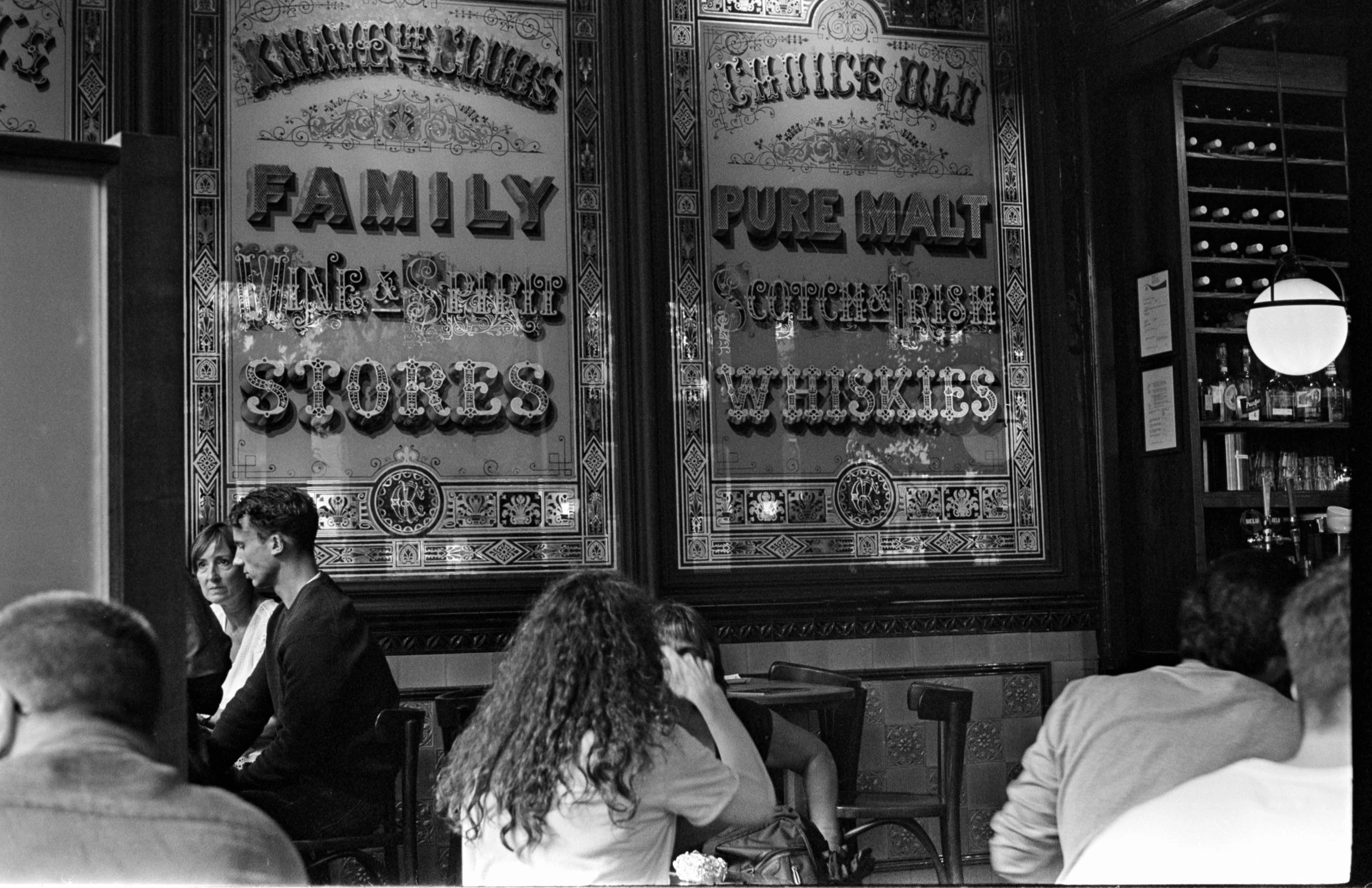
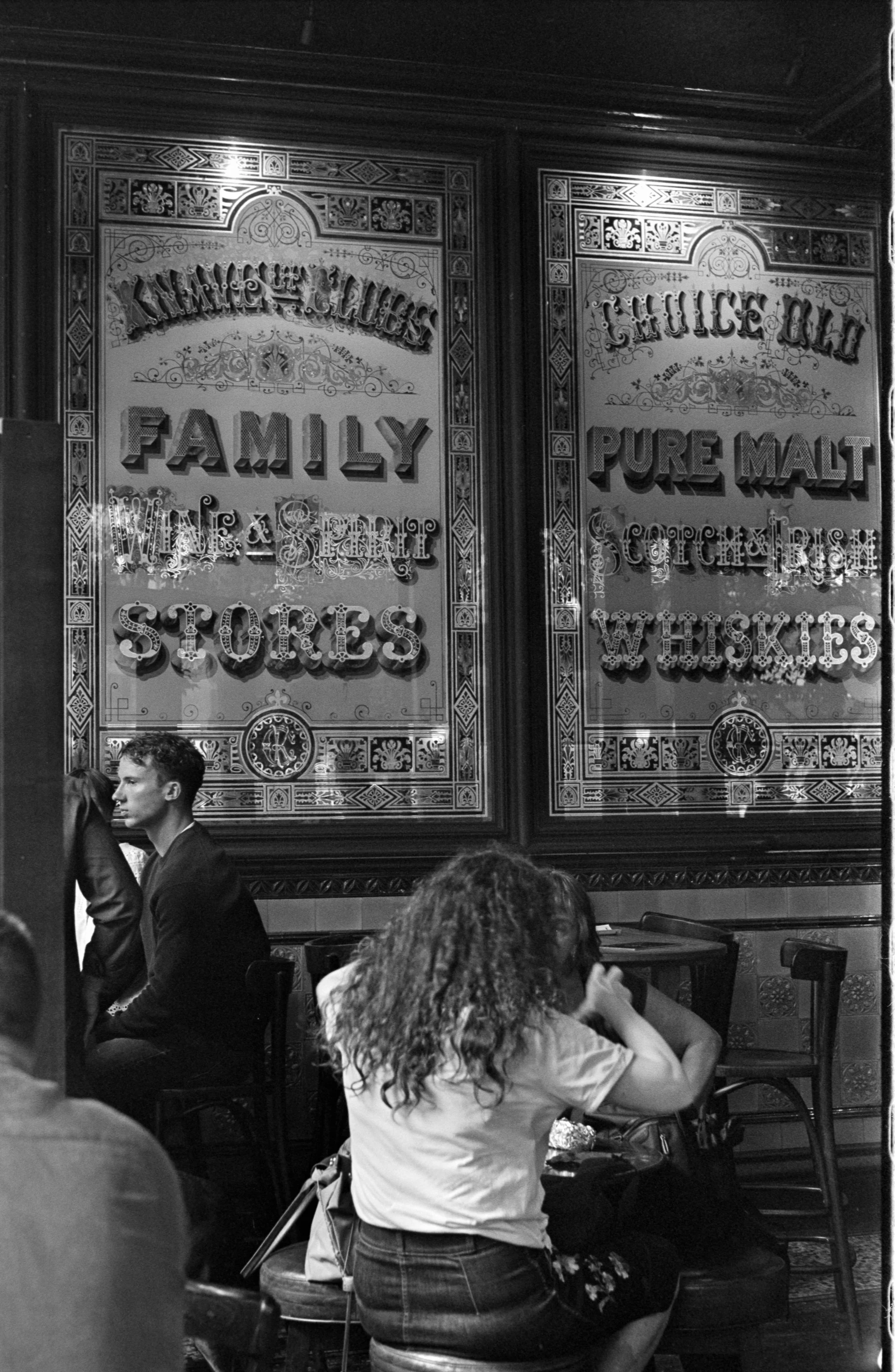
No camera on earth is quite so good at making you feel competent while doing almost nothing for you as a Leica M3. It has no meter, no autofocus, no battery, no menu, no little screen on the back showing you what a hash you've made of things, and yet the moment you lift it to your eye you feel like a man who knows what he is about. This is entirely an illusion, of course. What actually happens is that you stand in the doorway of the Knave of Clubs on a Sunday lunchtime, squinting at a gilt Victorian glass panel advertising Choice Old Pure Malt Scotch and Irish Whiskies, silently multiplying and dividing in your head, and arrive after some ninety seconds of intense mental arithmetic at an exposure of f/2.8 at a sixtieth, which is what you were going to use anyway (see notes passim). Then you press the shutter and the M3 makes a noise like a diminutive Bodleian librarian closing an exceptionally small drawer, nobody in the pub so much as glances up, and you experience a small private surge of triumph so disproportionate to the achievement that you have to go and sit down with a pint……..
I had come, in a frankly unearned way, to walk in the footsteps of Markéta Luskačová, who photographed in this very room in 1975 and 1976 and produced pictures now hanging in the Tate and the Arts Council Collection — a woman with a bird in a cage, a man laughing, ordinary people made permanent. It is worth pausing on how extraordinary that is. In 1976 this pub was known locally as the Bird House, because the traders from the Club Row market next door would bring their songbirds inside and sell them over the beer, which strikes me as the single most agreeable piece of information I have learned about any pub anywhere recently. Luskačová had arrived from Prague a year or two earlier and fallen upon London's street markets with the delight of someone who had grown up without them. She got in among the dealers with their linnets and their canaries and their diminishing lion cubs, and the animal rights protestors so disliked her sympathies that one of them pushed her in front of a car. You do think about this sort of thing while you are fiddling with a film advance lever and wondering whether the barman has noticed you.
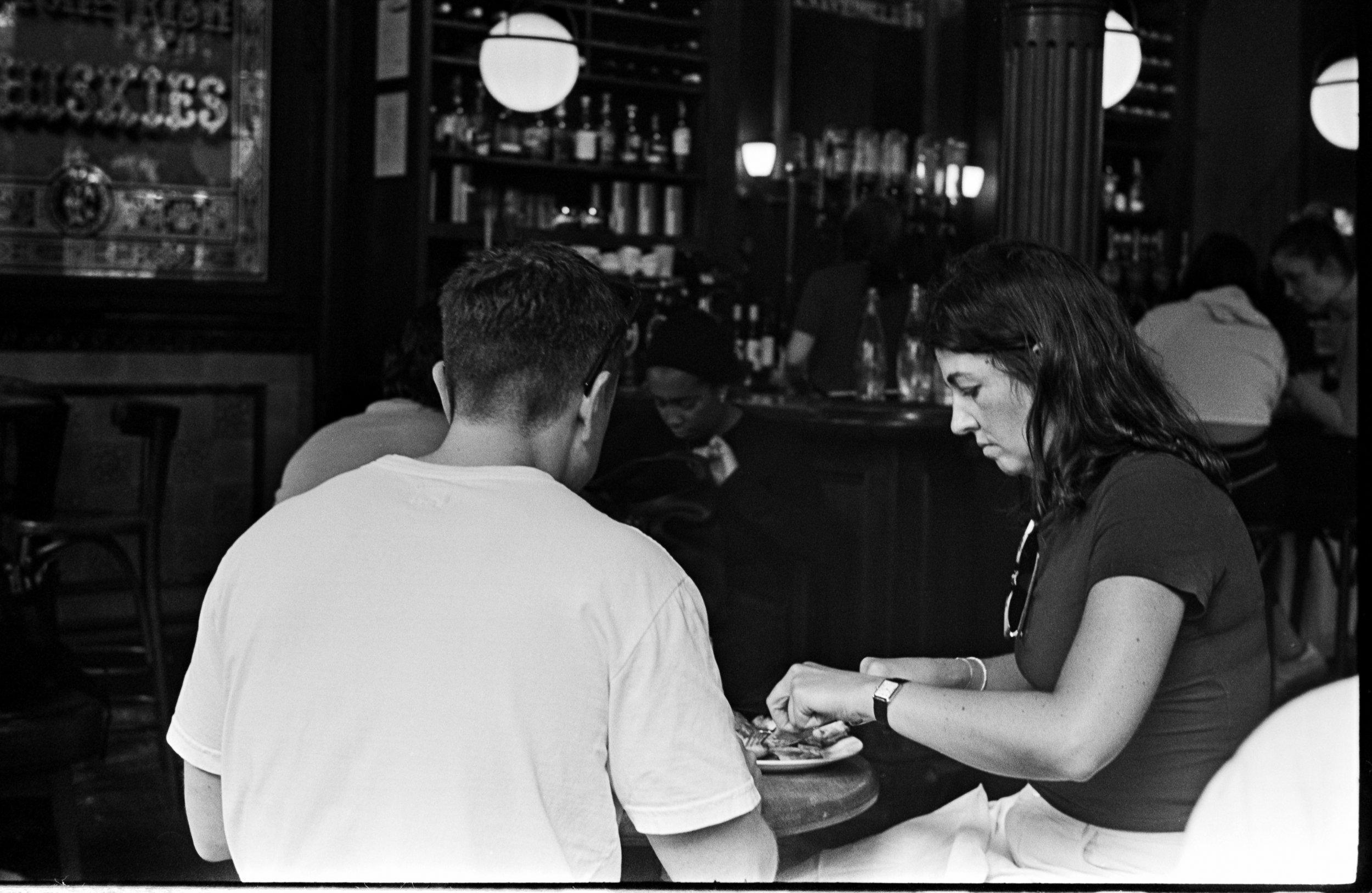
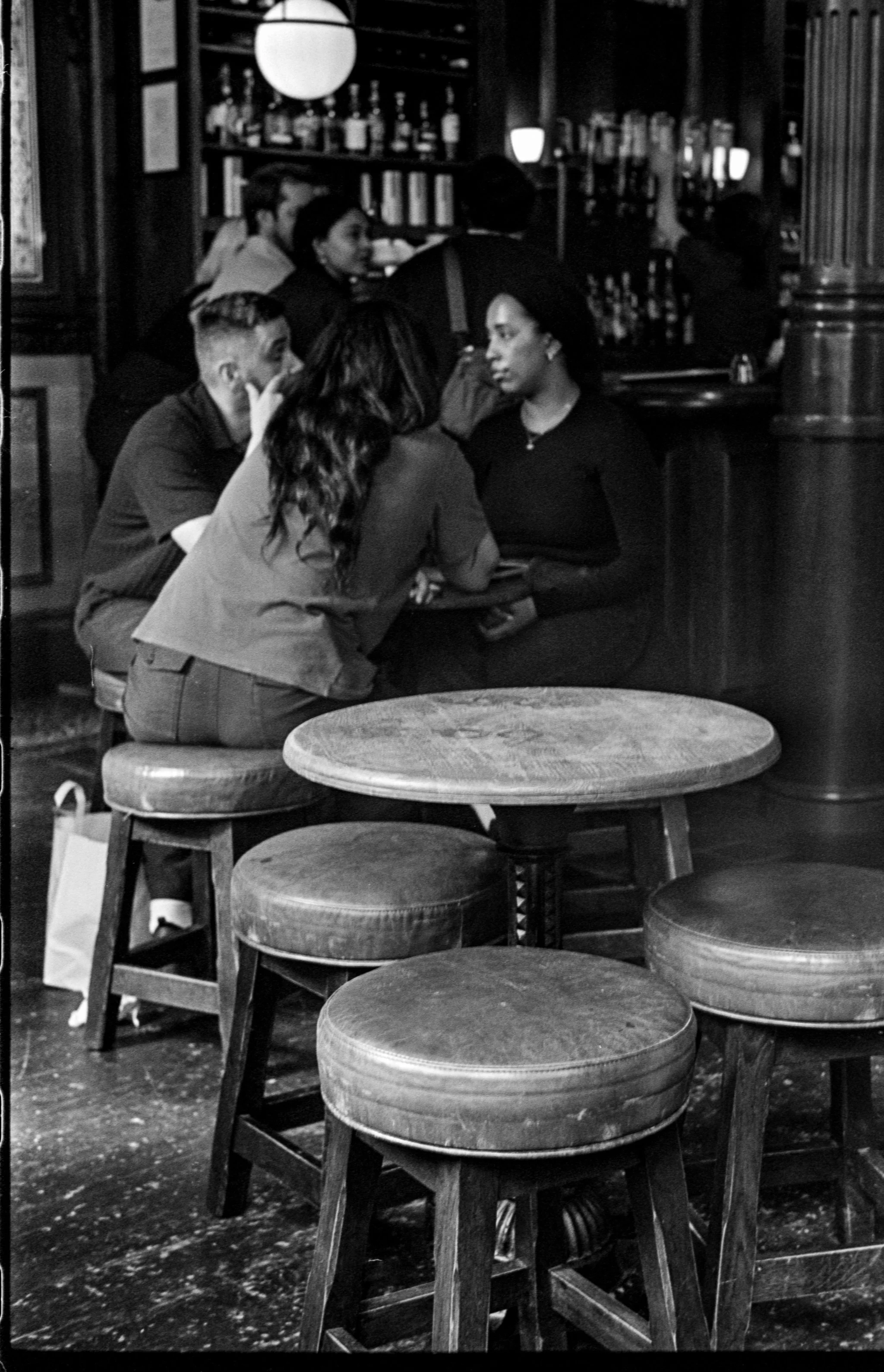
And the beautiful thing — the thing that makes the whole ‘hat stand’ exercise (a phrase I’m trialling) worthwhile — is how little the building has surrendered. The mosaic floor is still there in the old saloon bar entrance, and the green tiled dado, and those three gilt glass panels that have been quietly advertising brandy to the East End since 1880, when almost every pub in London had them and now hardly any do. Somebody sensible has put a rotisserie in the corner and oysters on the menu and Guinness on the bar, which is exactly the correct set of decisions, and the light coming in off Bethnal Green Road falls across the tiling in the same way it must have fallen across it for Luskačová. So l shoot thirty-six frames on my camera designed the year before Churchill left Downing Street, and I have no idea whether a single one of them is any good, and (due to an impromptu appointment with the Atlantic next week) I wont know for a fortnight, and I order another six oysters and feel, all things considered, immensely pleased with the world………..