On Port Isaac
Leica M6 and Summicronin the Haze….
Autumn ‘26
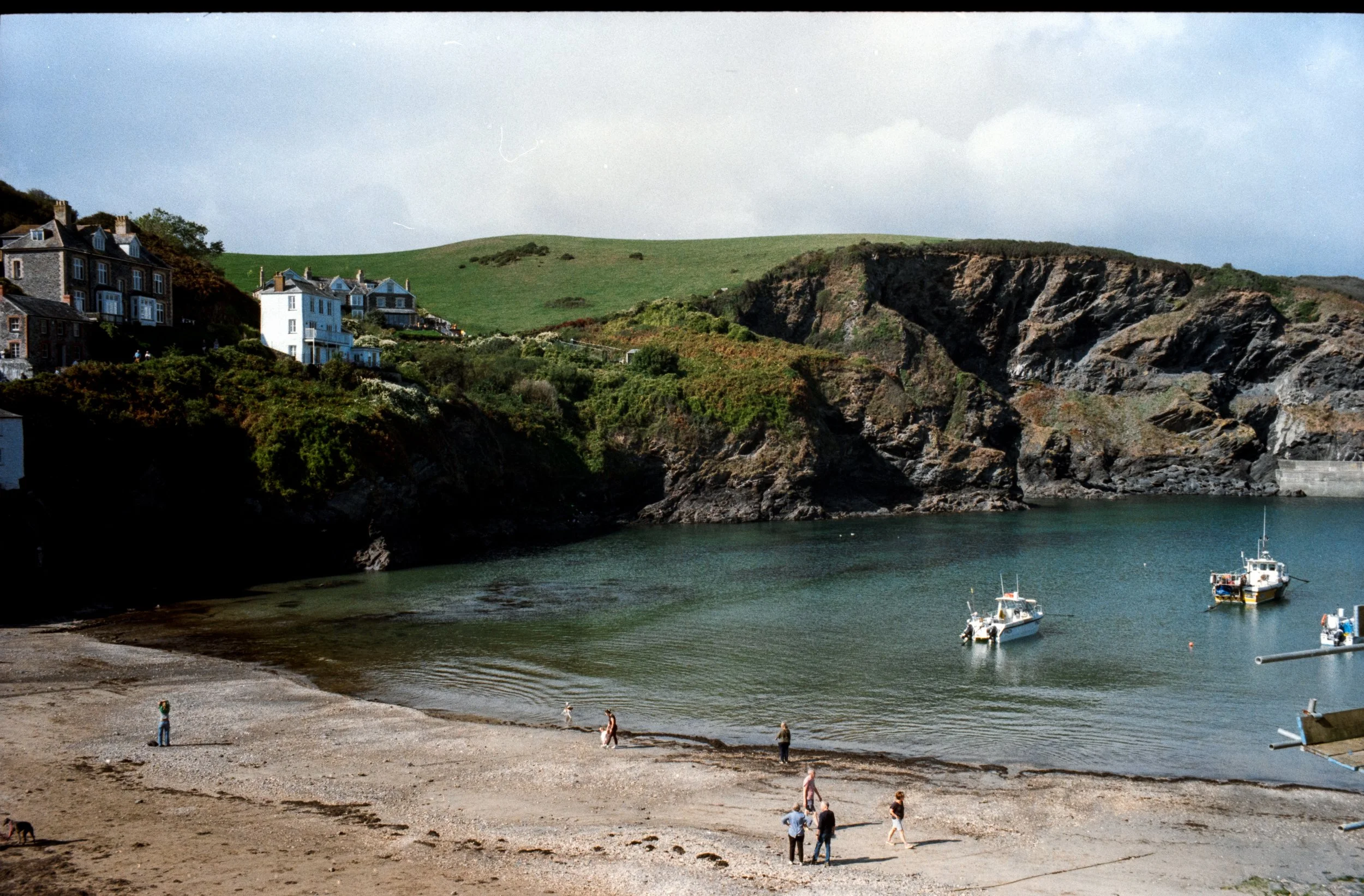
Port Isaac is the sort of place that seems to have been designed by someone who had heard about towns but never actually seen one. It sits in a steep, narrow cleft in the north Cornish coast, as if a giant had taken a bite out of the cliffs and the villagers had simply moved into the gap before anyone could object. The name is thought to come from the Cornish Porth Isek, usually translated as "corn port," which tells you that from the very start this was a place defined by what came in and out of its harbour rather than by any notion of comfort. The earliest settlement clung to the only bit of level ground available, the tiny beach and the mouth of the stream that carved the valley, and everything since has been a matter of squeezing more houses onto slopes that would give a mountain goat pause. It is a town shaped less by planning than by the grim negotiation between human stubbornness and gravity, and gravity, I'm pleased to report, has mostly been a good sport about it.
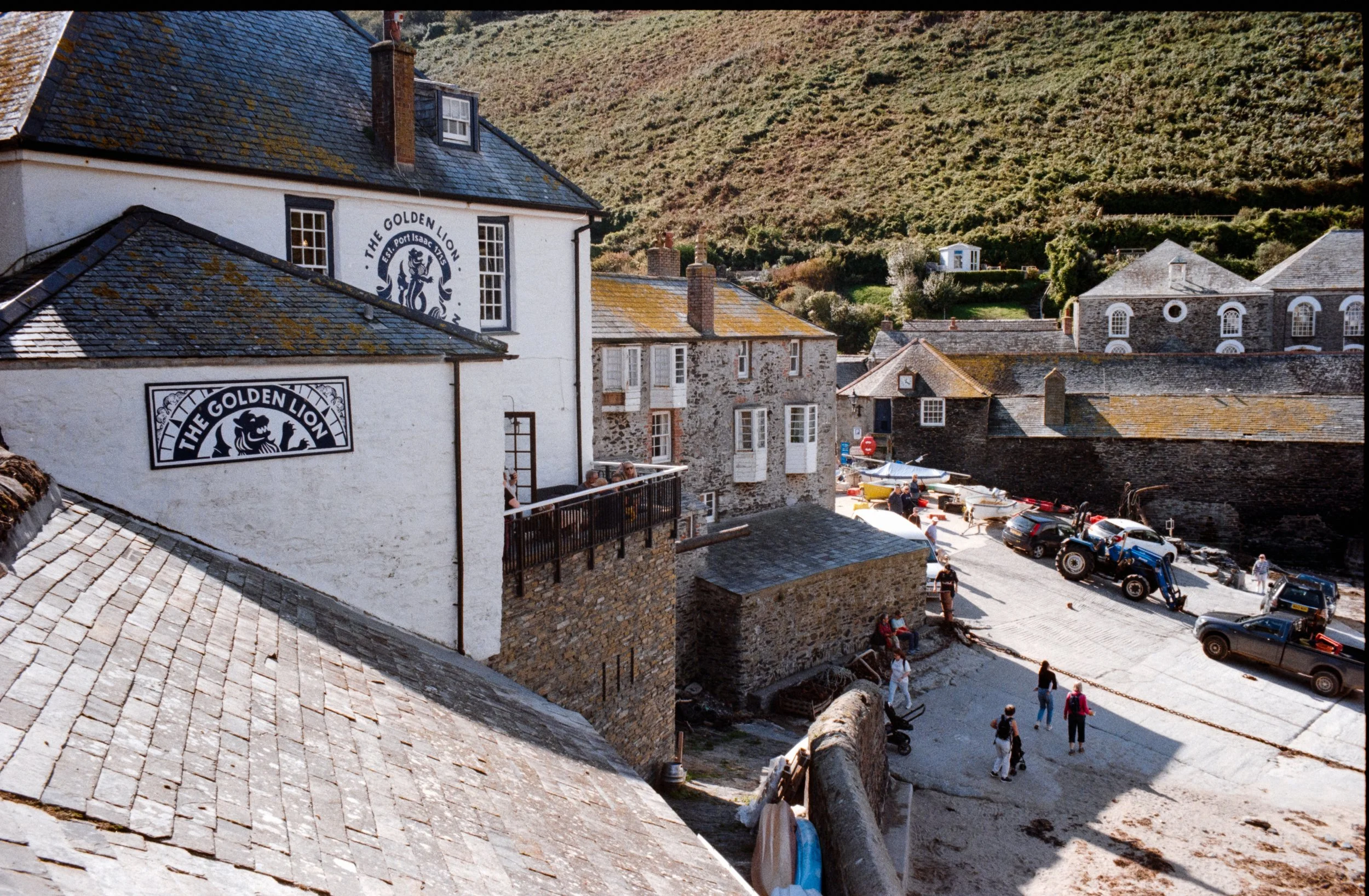
The harbour is the reason anything is here at all. A pier was in place by the reign of Henry VIII, and for centuries the village made its living from the sea: shipping out slate from the great quarry at Delabole, bringing in coal, limestone and whatever else a remote coastal community needed, and above all catching pilchards in quantities that now sound like a clerical error. The pilchard trade gave Port Isaac its distinctive fish cellars, sturdy stone buildings arranged around courtyards where the catch was salted, pressed and packed for export to Catholic Europe, which apparently couldn't get enough of them. When the railway arrived at Port Isaac Road in the 1890s, several miles inland, it quietly killed off much of the coastal cargo trade, and when the pilchards themselves wandered off early in the twentieth century, as fish sometimes will, the village was left with a harbour, a lot of oddly shaped buildings, and no clear idea what to do next.
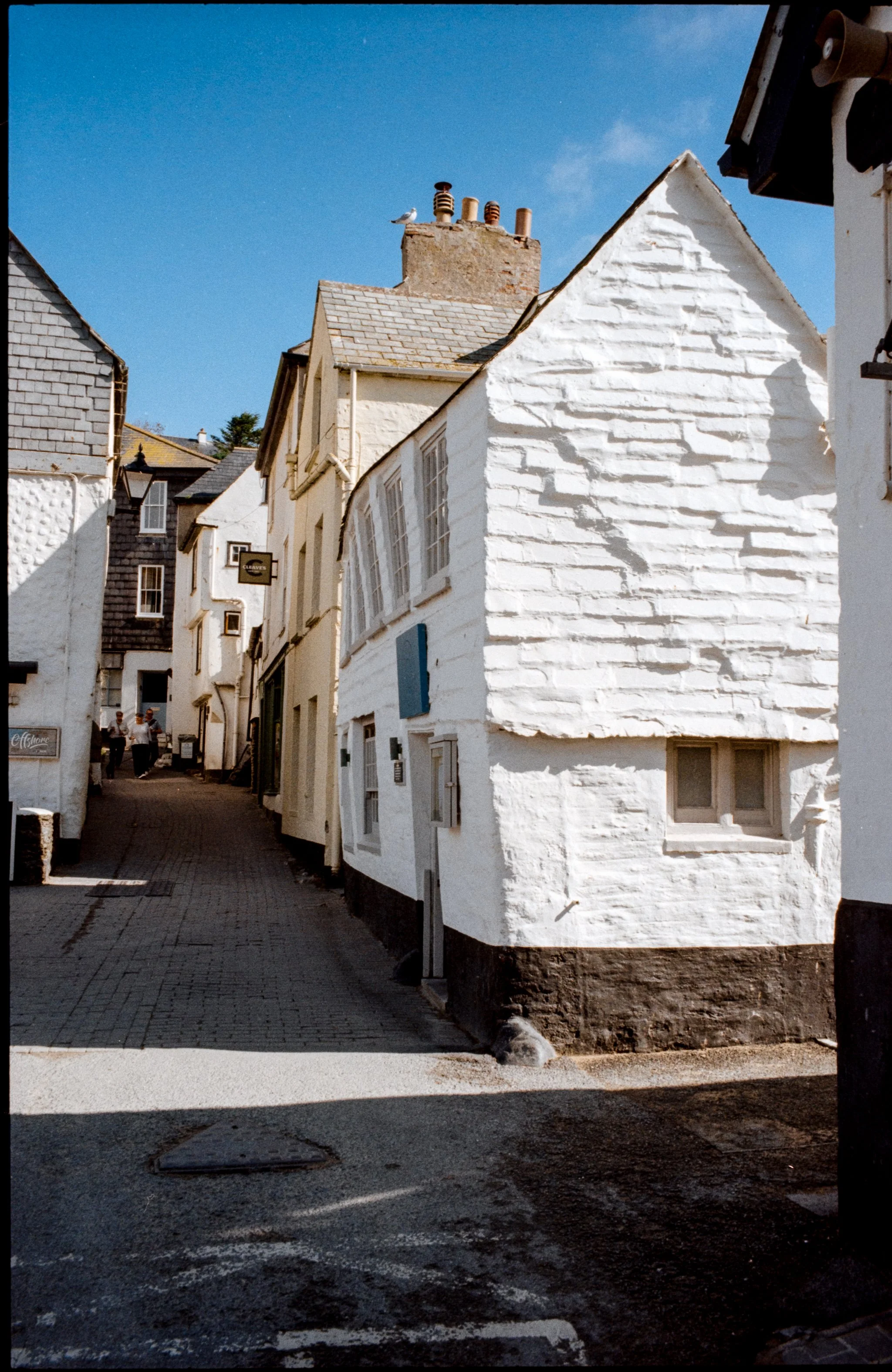
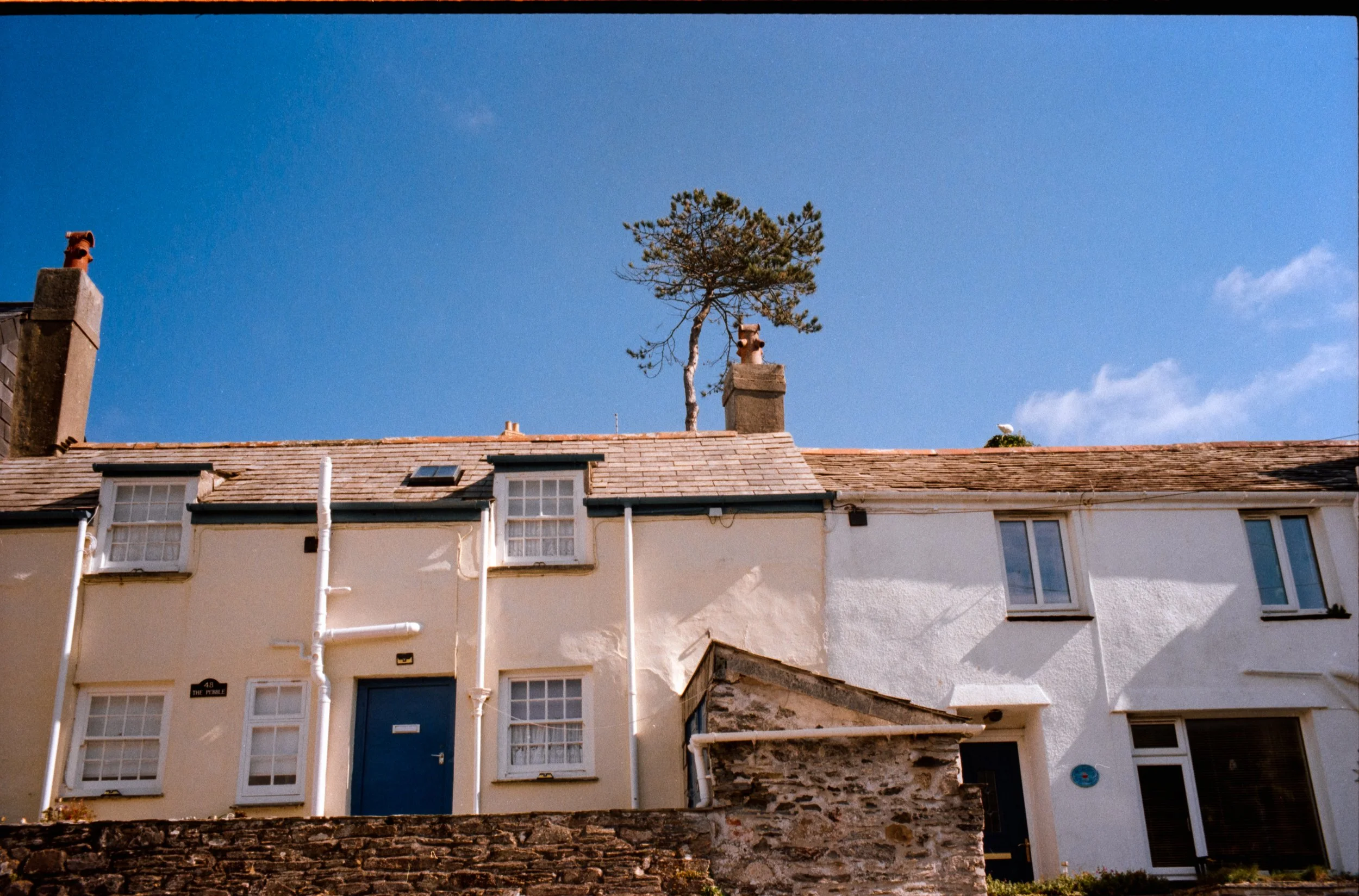
The buildings themselves are a lesson in making do. Because every scrap of flat land was precious, houses were built wherever they would stand up: stacked above one another on terraces, jammed against the rock, turned at peculiar angles to follow the line of a lane or dodge a boulder. The material was whatever lay to hand, which in north Cornwall meant slate, used for walls, roofs, and hung on the fronts of houses like overlapping fish scales to keep out Atlantic weather that arrives sideways and with real conviction. Much of it is whitewashed, which gives the village its cheerful, freshly laundered look from the cliff path. Scattered among the fishermen's cottages you find the odd grander building, the Victorian schoolhouse perched above the harbour, now a hotel, and cottages with names and shapes so eccentric they seem to have been designed by committee during a gale. Nothing is quite square, nothing lines up with anything else, and the overall effect is of a place that grew the way coral does, one stubborn addition at a time.
The public spaces, such as they are, follow the same logic of scarcity. The heart of the village is the Platt, a sloping expanse of slipway and hard standing beside the harbour where boats have been hauled up for centuries and where, in more recent times, visitors park their cars, apparently in the sincere belief that the tide is a rumour. It isn't, and watching someone sprint down to rescue a hatchback from the advancing Atlantic is one of the finer free entertainments in Cornwall. Leading away from the harbour are lanes of heroic narrowness, the most celebrated being Squeeze-ee-belly Alley, a passage so tight that the name serves as both description and warning. These streets were never meant for anything wider than a donkey with modest ambitions, and the modern delivery van enters them with the doomed optimism of a man trying to fit into his wedding suit several years after the event. Yet this is precisely what makes the place work: the spaces are human-sized, intimate, and communal almost by force, because there simply isn't room to avoid your neighbours.
What gives Port Isaac its sense of place, in the end, is that almost nothing about it was a choice. The valley dictated where the streets could go, the harbour dictated why anyone came, the fish dictated which buildings got built, and the weather dictated what they were made of. When the industries that shaped it faded away, the physical form they left behind was so complete and so peculiar that it became the attraction in its own right, helped along enormously by television, which cast the village as the fictional Portwenn and brought coachloads of admirers to peer at the doctor's surgery. This has created its own modern pressures, not least a high proportion of holiday homes in a place that was built for working families, and the slightly eerie winter quiet that follows. But stand on the headland on a clear evening, looking down at that improbable tumble of slate and whitewash wedged into its cleft, and you can't help admiring it. Port Isaac is proof that the most memorable places are often not the ones anybody set out to make, but the ones that simply refused, against all sensible advice, to fall into the sea.