

Japanese Women Photographers 1950’s to Now
Photographers Gallery , September 2026
I had meant to see this exhibition in June, and then in July, and then at some unspecified point in August when things calmed down, which of course they never do. So it was that I found myself hurrying down Oxford Street on the very last Saturday of its run, on one of those gloriously sunny early-autumn days that London produces about twice a year, as if to apologise for everything else. The sensible thing would have been to sit in a park with an ice cream, and the entire population of the capital appeared to have reached the same conclusion, but deadlines are deadlines and procrastination, I have found, always sends the bill eventually. I know The Photographers' Gallery about as well as I know my own kitchen, which made my dithering all the more inexcusable, and once through the door, and relieved of fourteen pounds, I found twenty-seven Japanese women and more than two hundred of their photographs, along with the faintly shaming sense that an entire tradition had been sitting beside me on the bus for seventy years and I had never thought to say hello. I could tell you about Ninagawa Mika's goldfish, Kawauchi Rinko's whispery light, Ishikawa Mao's Okinawa or Narahashi Asako's Mount Fuji bobbing on the horizon like a cough sweet, but three photographers in particular grabbed me by the lapels and wouldn't let go.
The first was Ishiuchi Miyako, who photographs the belongings of the dead, her own mother's included: lipsticks worn down to slanted stubs, slips gone translucent with age, shoes still holding the shape of the feet that filled them. It sounds unbearably mournful, and it is, a bit, but it is also so tender and so precise that you find yourself standing very still, like a man in church who isn't sure when he's meant to sit down. Then, round a corner, came Hiromix, who in the 1990s picked up a cheap compact camera, pointed it at herself and her friends, and more or less invented the way an entire generation now photographs its lunch. Her pictures are wonky, flash-blown and gloriously unbothered, and it is hard to overstate how cheering it is to see a teenager with a point-and-shoot hung in the same building as the Serious Masters, looking entirely at home and probably wondering where the snacks are.
And then there was Tomoko Yoneda, the quiet one, who photographs places where terrible or momentous things once happened and which now look like nothing at all: a field, a road, a patch of pleasant grass. The captions do the heavy lifting, and the effect is like being told, halfway through a picnic, that you are sitting on an old battlefield. I stood in front of one for a good while feeling the history seep up through the soles of my shoes. If I have a grumble, and I always do, it's that twenty-seven photographers across seven decades is a great deal to digest in one go, and by the top floor I felt like a man who had eaten the whole bento and then, unwisely, the pickles too. That, I concede, is partly my own fault for leaving it until the final weekend, when a leisurely second visit was no longer an option. The show has now packed its bags for New York, and I can only urge you to learn from my example and, the next time something this good comes along, go in June.
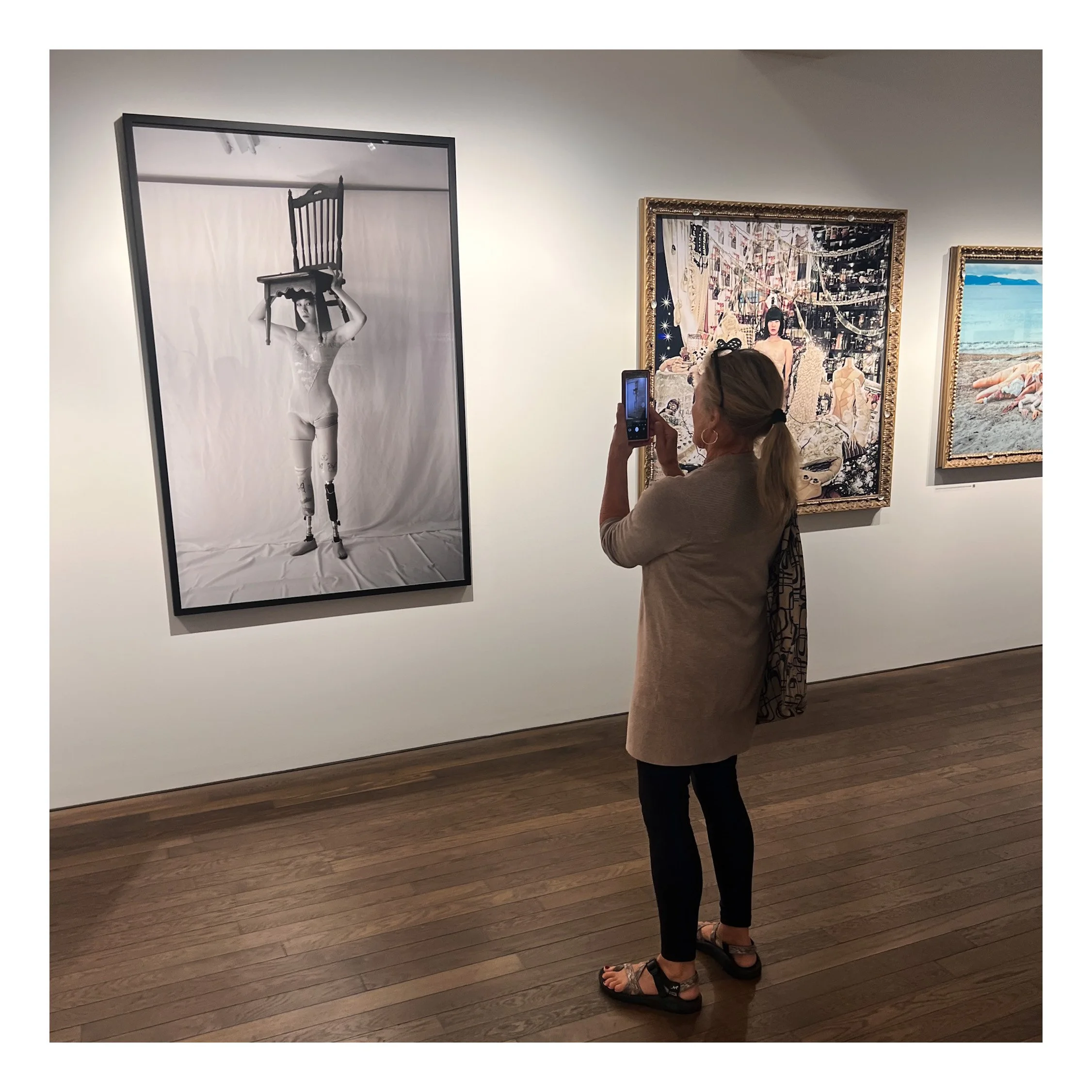
A woman with brown hair tied back taking a photo of artwork with her smartphone in a gallery. The artwork on the left is a black and white photograph of a woman holding a chair above her head, wearing lingerie and tights. The walls are white, and there are other artworks visible, including a colorful collage and a beach scene.
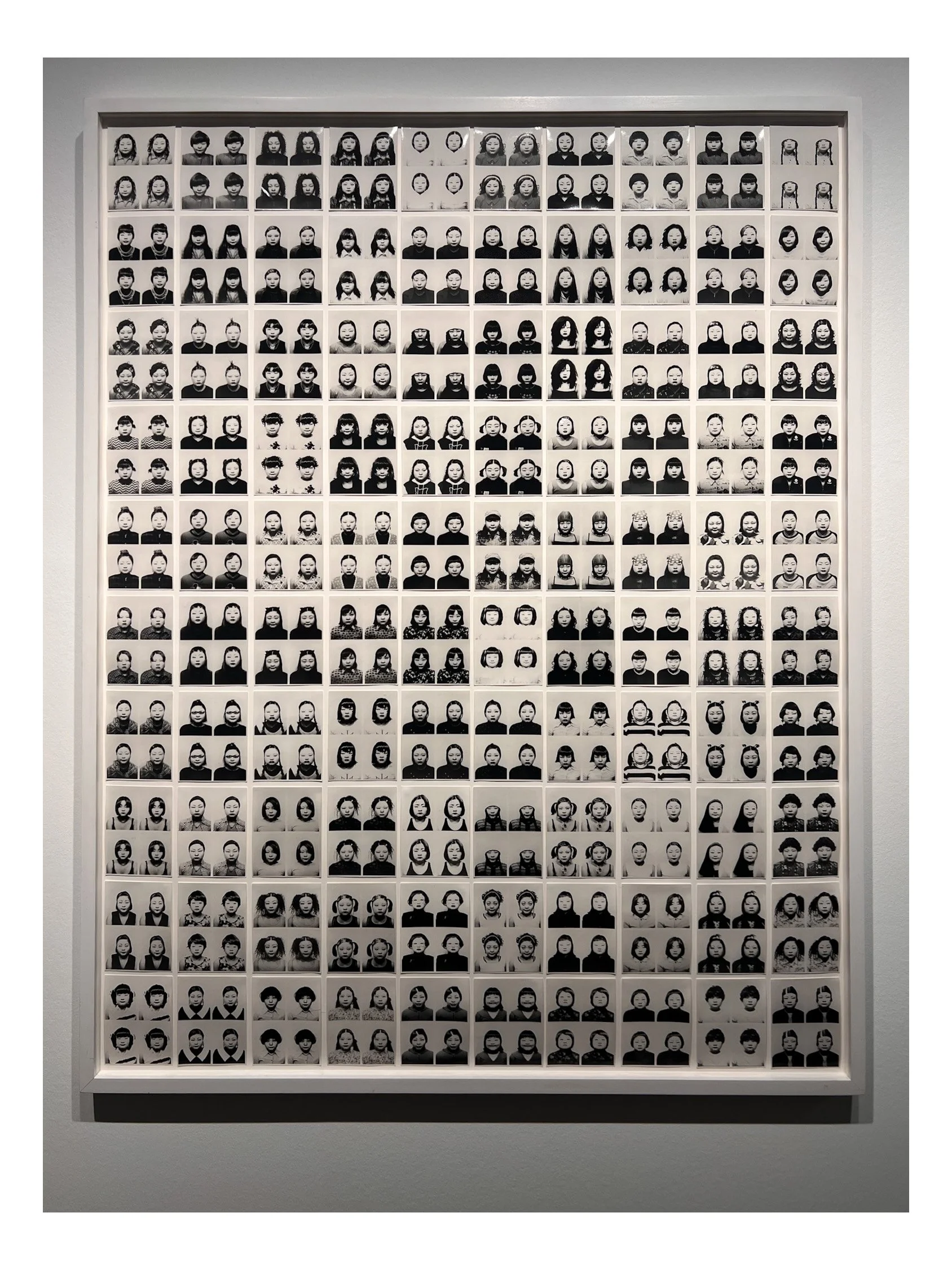
A framed collage of black-and-white portrait photographs of children arranged in a grid.
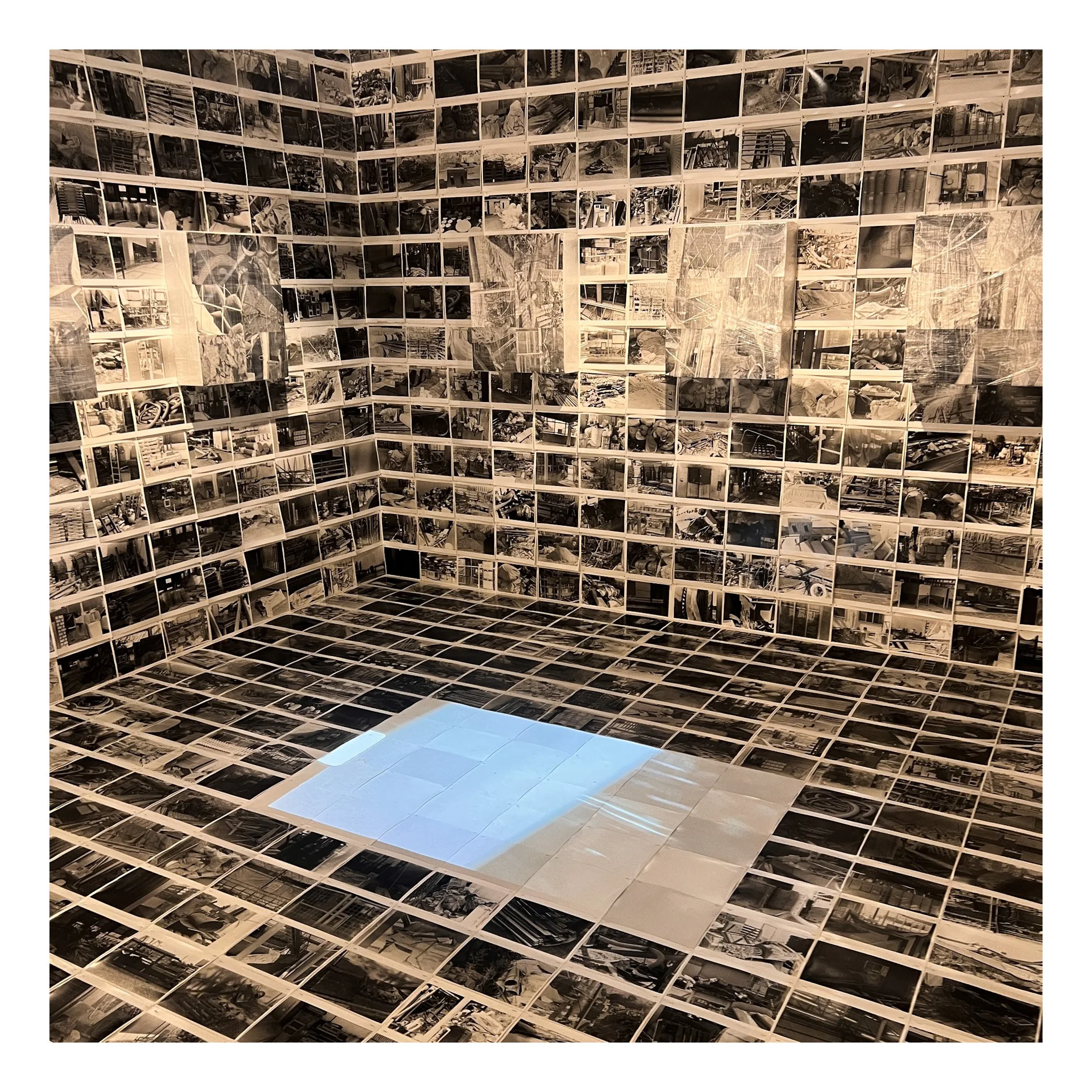
Interior of a curved room or hallway lined with numerous black-and-white photographs or printed images on walls that extend to ceiling and floor.
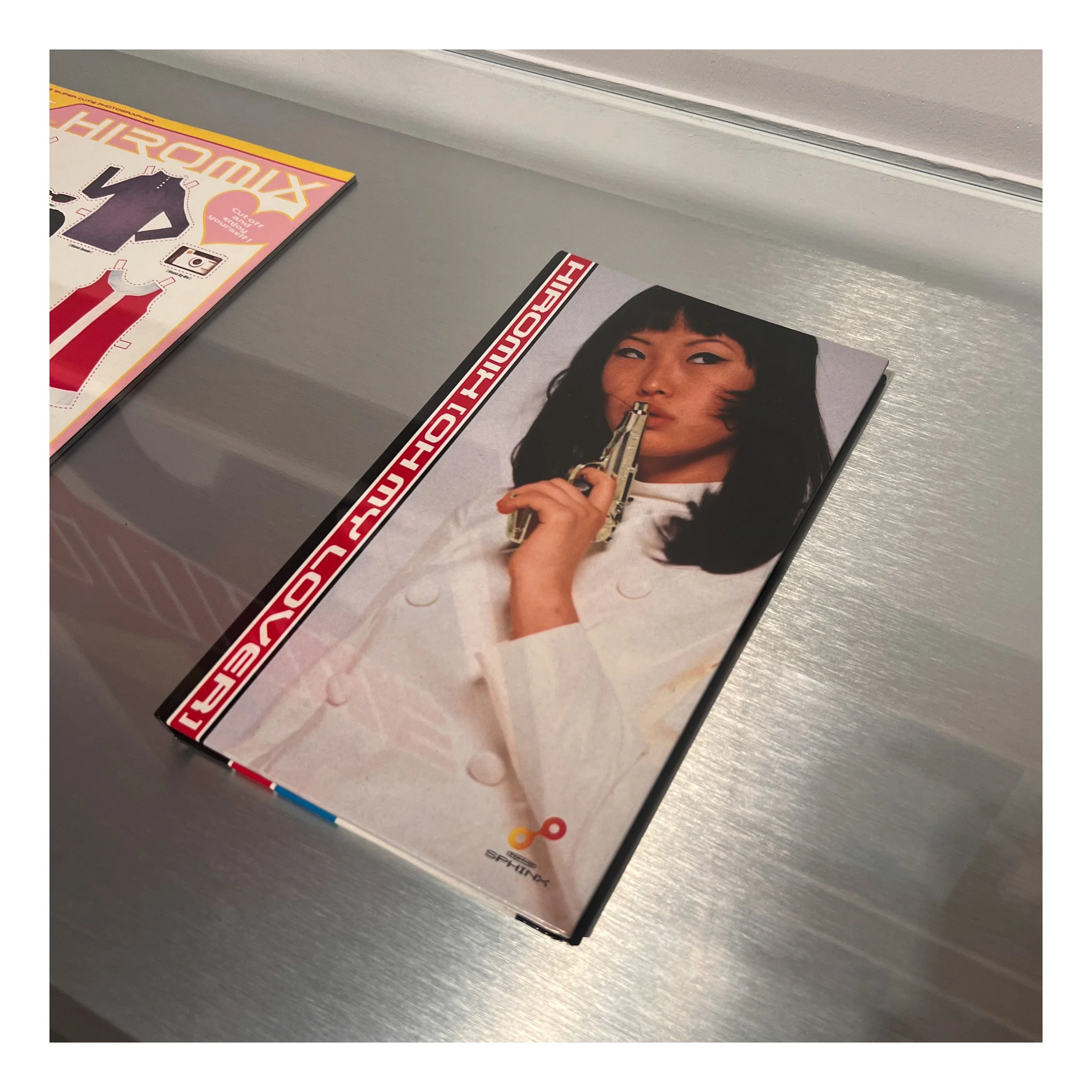
Part of a magazine or book titled 'Hiroshima' with a woman's face holding a gun on the cover, and a partially visible magazine or booklet titled 'Chromix' on a gray surface.
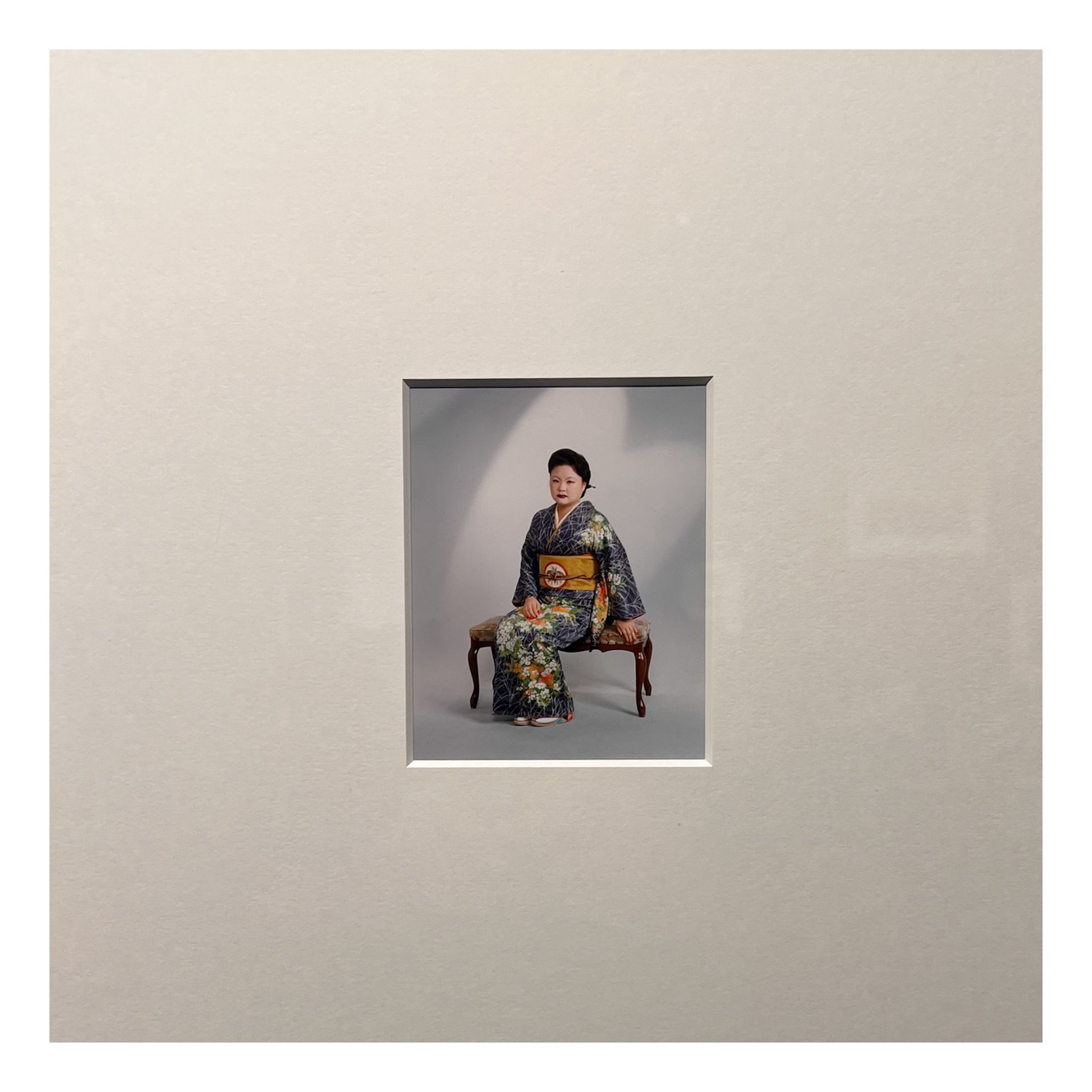
A woman dressed in traditional Japanese kimono standing in a gallery with a white wall and an abstract portrait painting behind her.
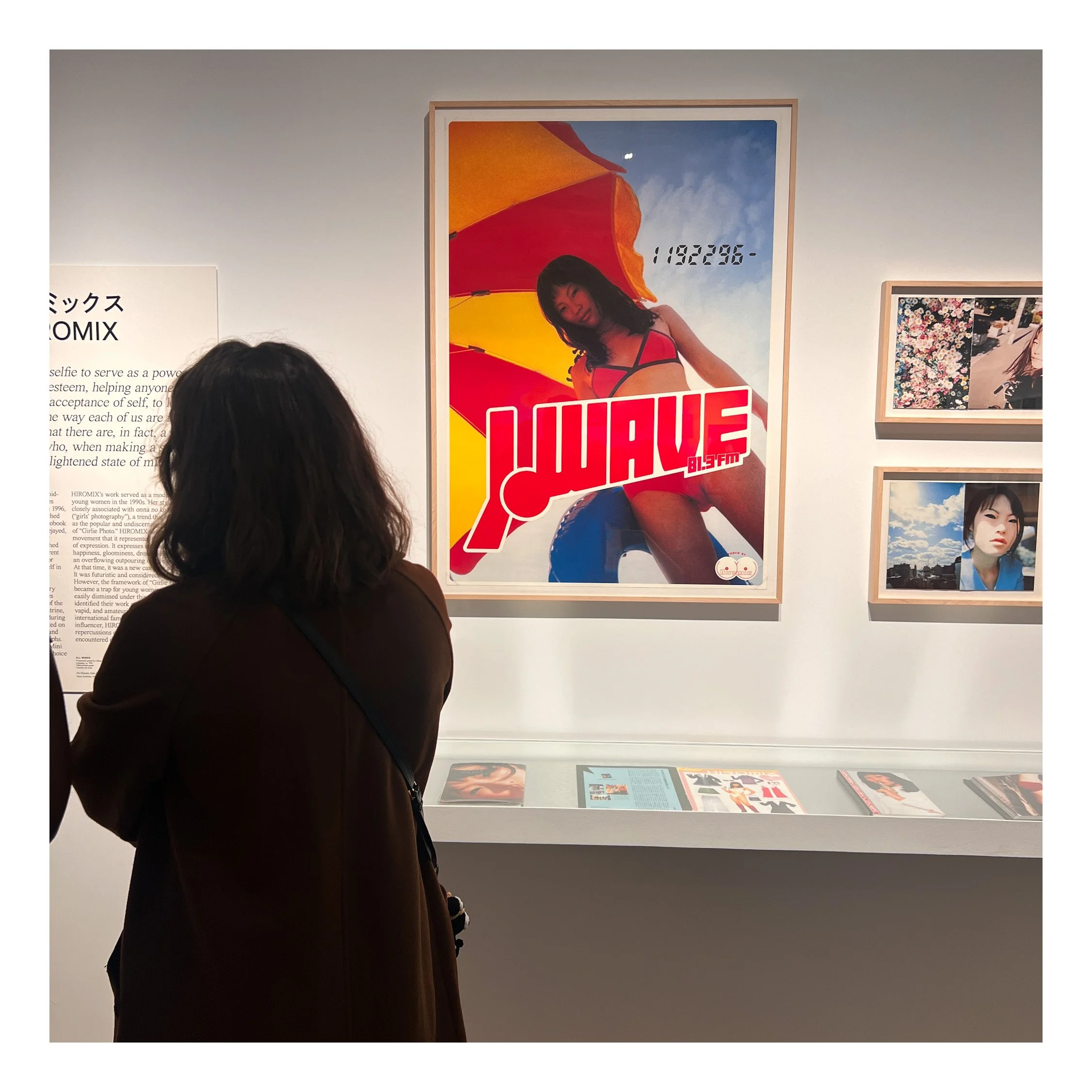
A person with dark hair and a brown coat observing artwork in a gallery, with framed pictures hanging on the white wall behind.
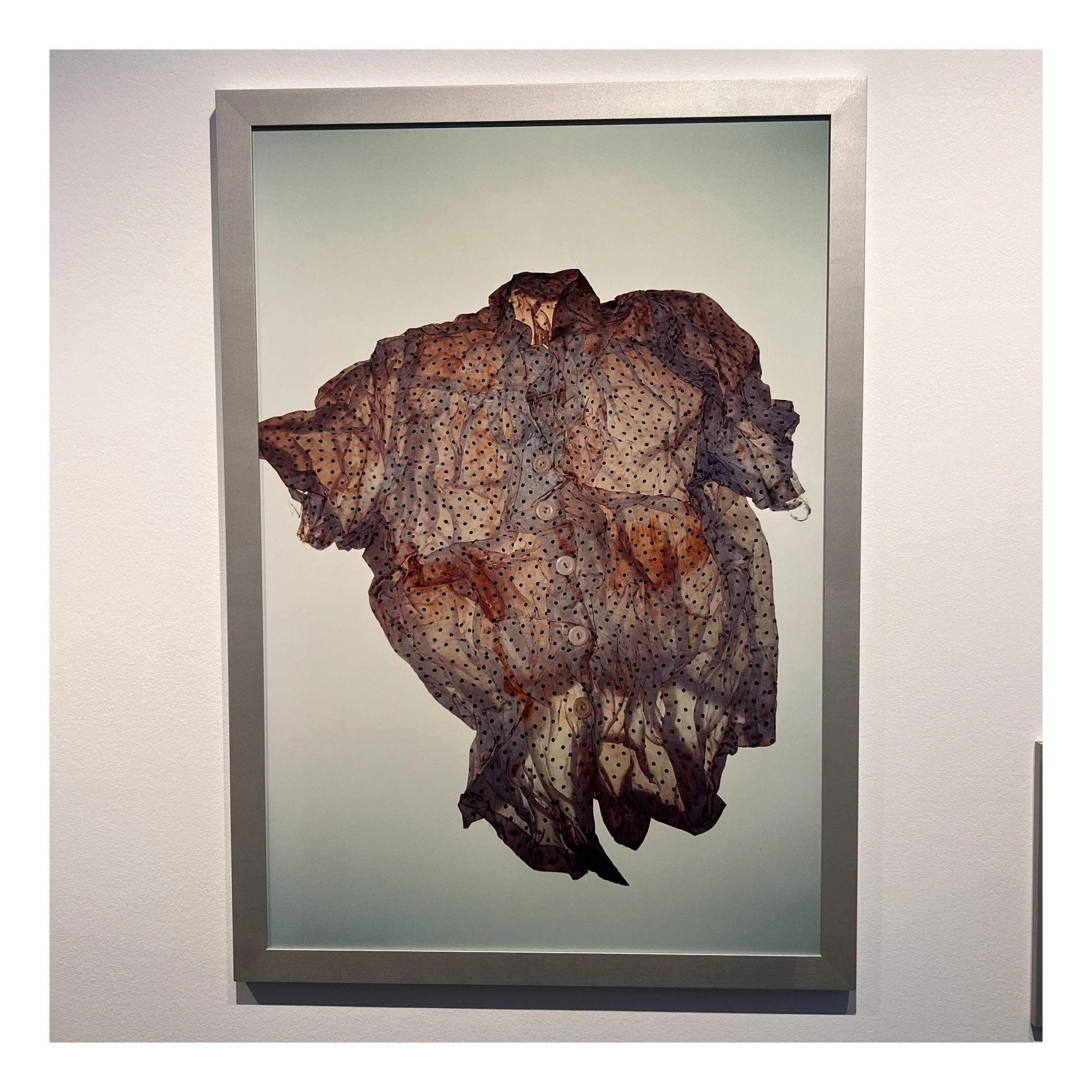
A framed artwork on a white wall showing a crumpled, sheer, polka-dotted fabric in shades of brown and beige, with ruffled edges and buttons.
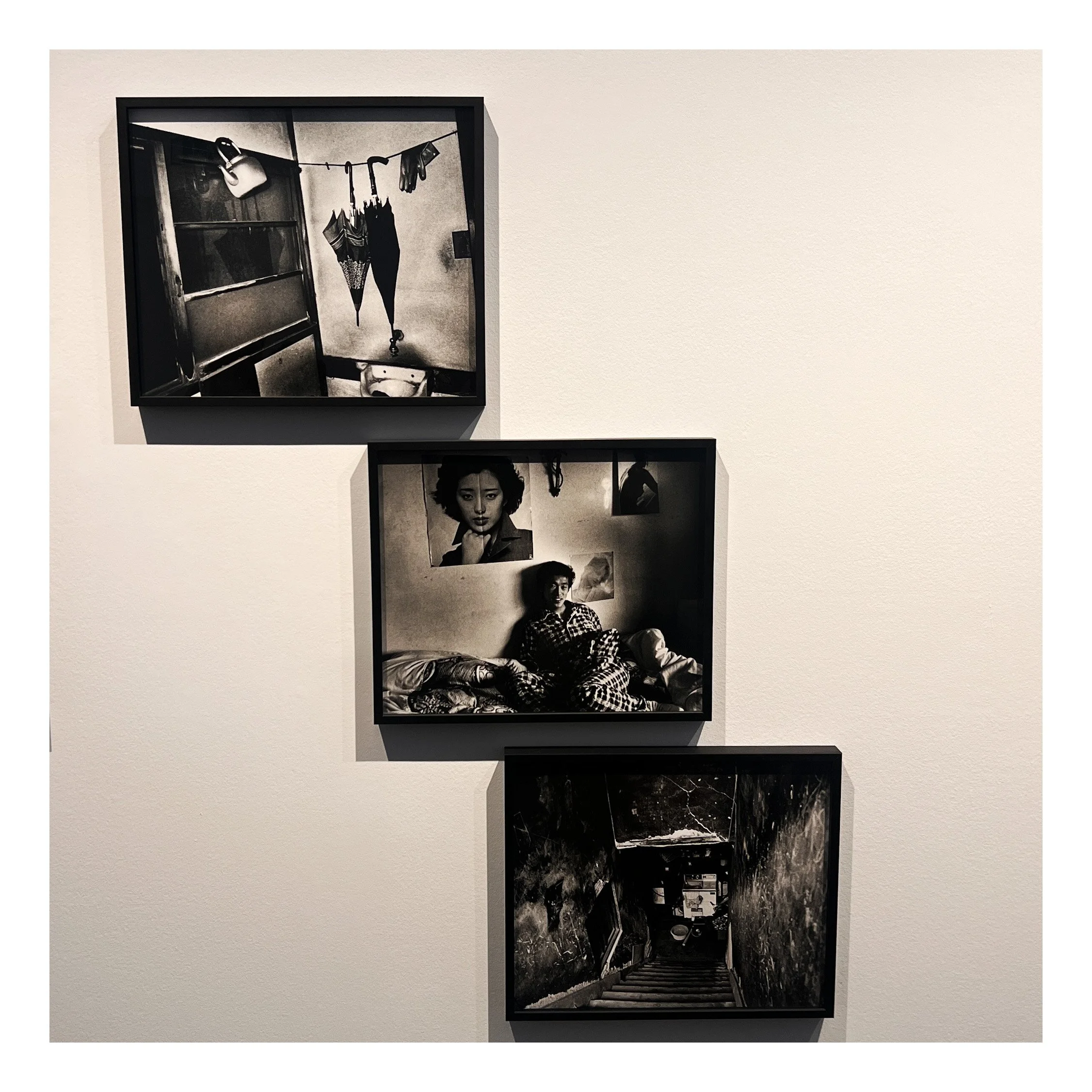
Black and white photographs of women, one in a plaid shirt sitting on a bed, others in various poses, various backgrounds, some framed
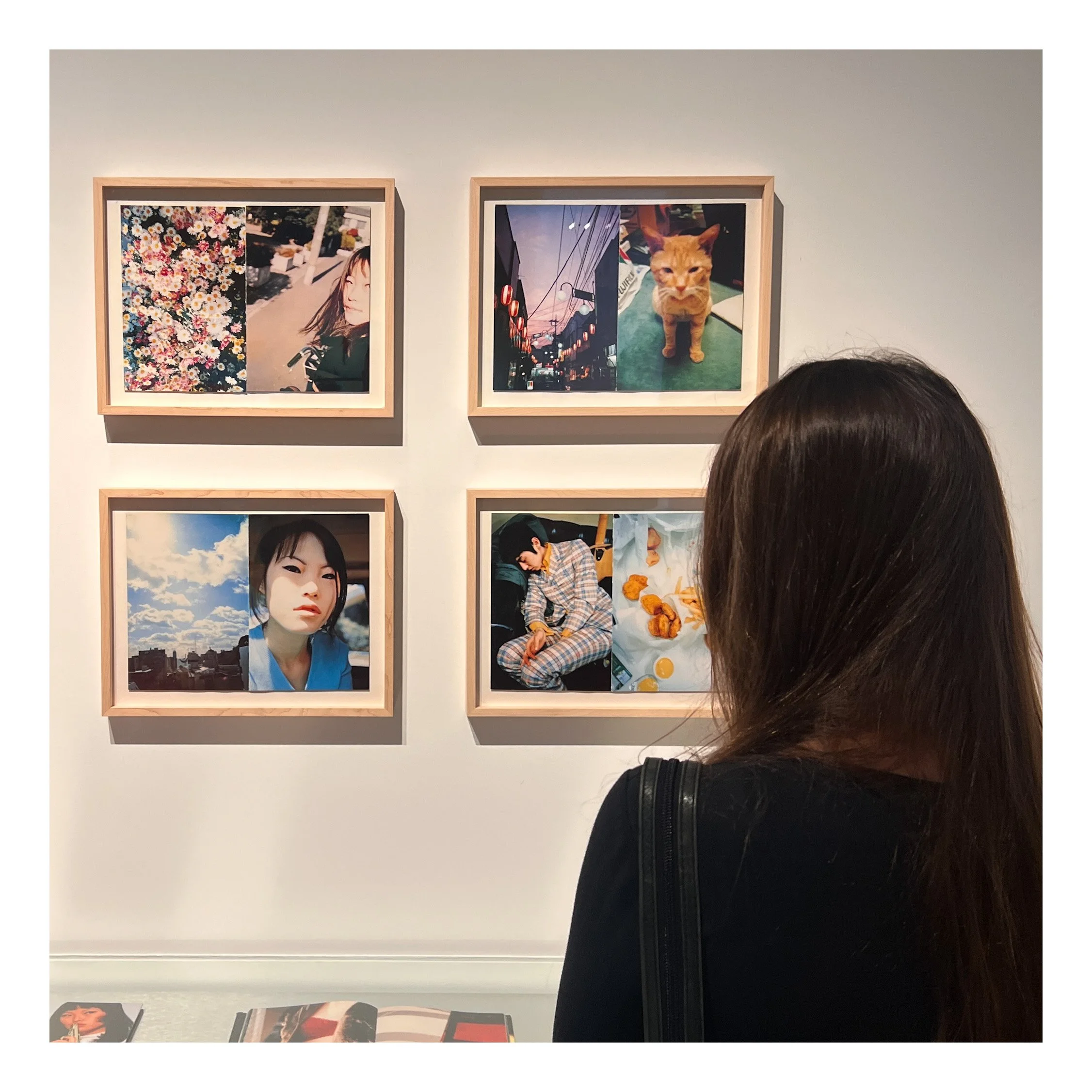
Photo of art gallery wall with framed photographs, including a city scene with hanging lights and a portrait of a woman, viewed with person’s head in foreground.