

Painting The Riviera, Autumn 2026
The Royal Academy
I have always believed that the best way to experience the French Riviera is the way most of us actually do it: from Piccadilly, in October, with a bus wheezing past and a man outside Fortnum's handing out leaflets nobody wants. It was a perfectly decent London day, which is to say the sky was the colour of a filing cabinet. So it was with real gratitude that I climbed the steps of Burlington House and found myself facing a century of other people's sunshine. The premise is simple and agreeable. Starting in the 1870s, painters escaped the grim, coal-smudged cities of northern Europe for a strip of coast where the sea was a colour they had previously only seen on expensive ribbons. There they apparently realised that painting could be about light rather than about dukes. Monet put it best when he said that working there was like swimming in blue air. I can't help thinking that this is also roughly what it feels like to have too much rosé at lunch, and that the two discoveries may not be unconnected.
What struck me, as I drifted through the rooms with the slightly guilty air of a man who has not paid for an audio guide, was how differently everybody saw the same bit of shoreline. Monet's Morning at Antibes is all shimmer and hesitation, as if the scene might leave if he looked at it too directly. Cézanne, by contrast, seems to have regarded the Mediterranean as a geometry problem that needed firm handling. Then come Matisse and Bonnard, who painted it as though somebody had promised them colour would be rationed the following week, and Picasso, who painted it in so many styles that you start to wonder whether he simply kept losing track of which one he was meant to be doing. By the time you reach Yves Klein and his blue, which is less a colour than a sort of event, you feel you've watched modern art go through puberty in a series of increasingly nice hotels.
The cleverest thing the Royal Academy has done is to keep going after the paint runs out. The final stretch brings in railway posters and film, and you watch the Riviera turn from a painter's secret into a product, a place you could buy by the week with a sleeper berth and a straw hat. There is something touching about it, and something faintly sad: the light that once pushed Derain and Braque into giddy experiment ends up selling package holidays to people like me. Still, I emerged blinking onto Piccadilly in a markedly better mood. Rain was now coming down sideways and a bus went past with a magnificent lack of interest, but for a good hour and a half I had been transported, and that, frankly, is more than TfL was offering….
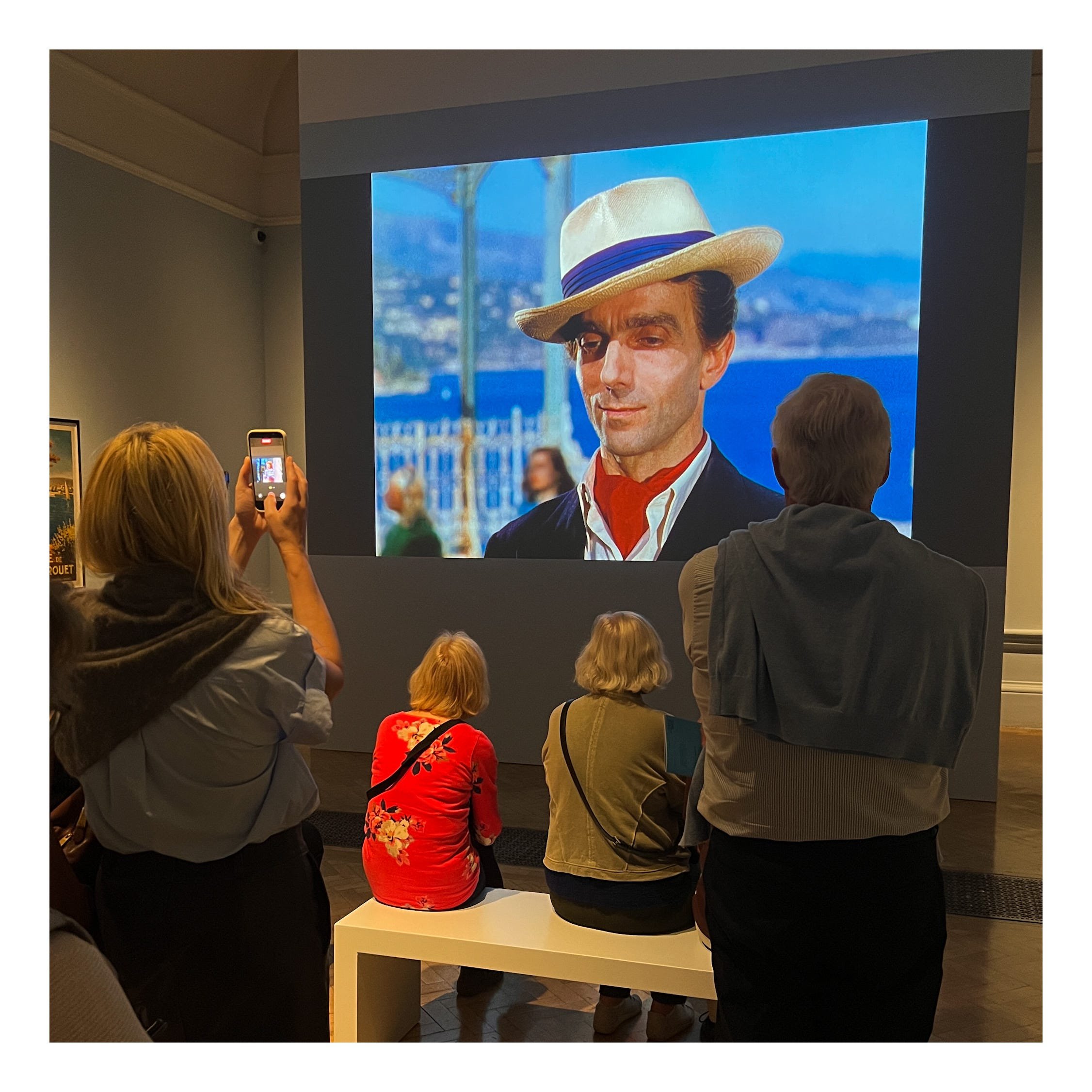
People gathered in a room watching a large screen displaying a historically iconic image of Fred Rogers, the beloved television personality, with a background of blue water and a fence, wearing a hat and suit.
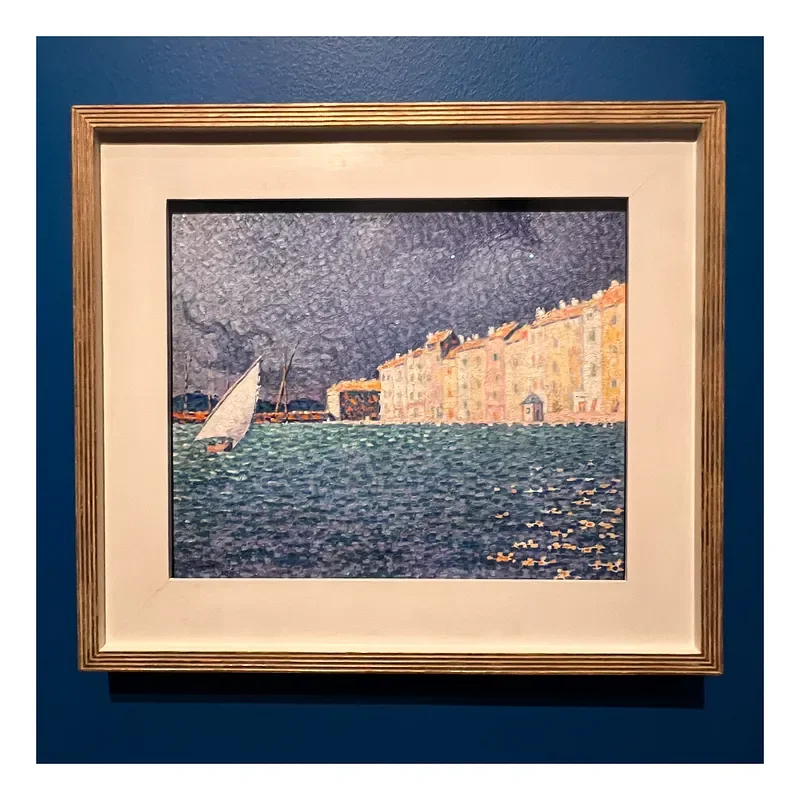
Painting of a sailboat on water near a row of buildings along the shoreline under a dark cloudy sky, framed and hung on a blue wall.
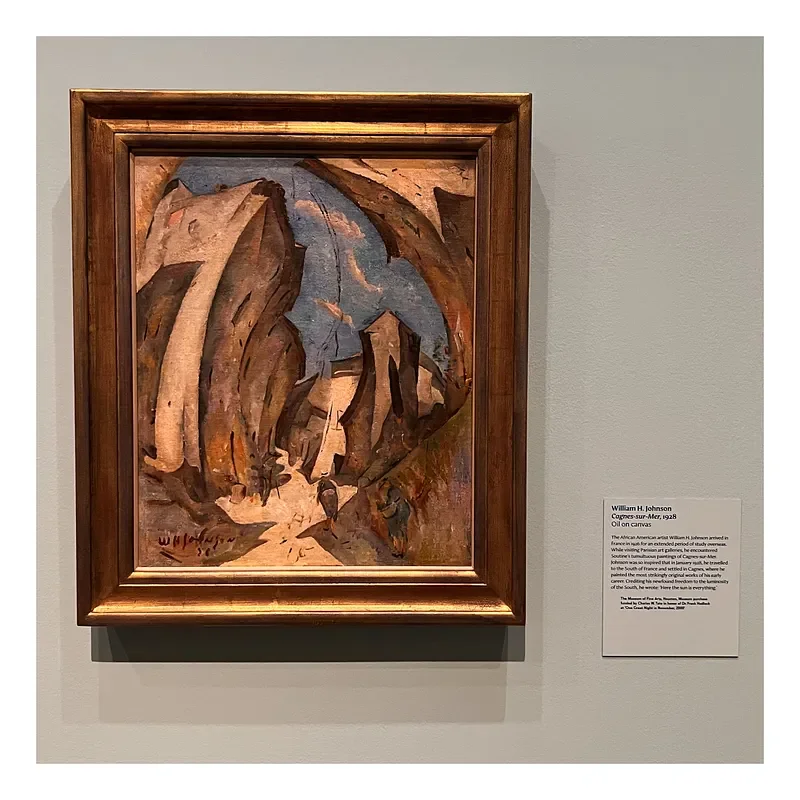
A painting titled 'Cogs in a Sturm,' 1928 by William H. Johnson, depicts abstract shapes in earthy tones inside a wooden frame, displayed on a gallery wall.
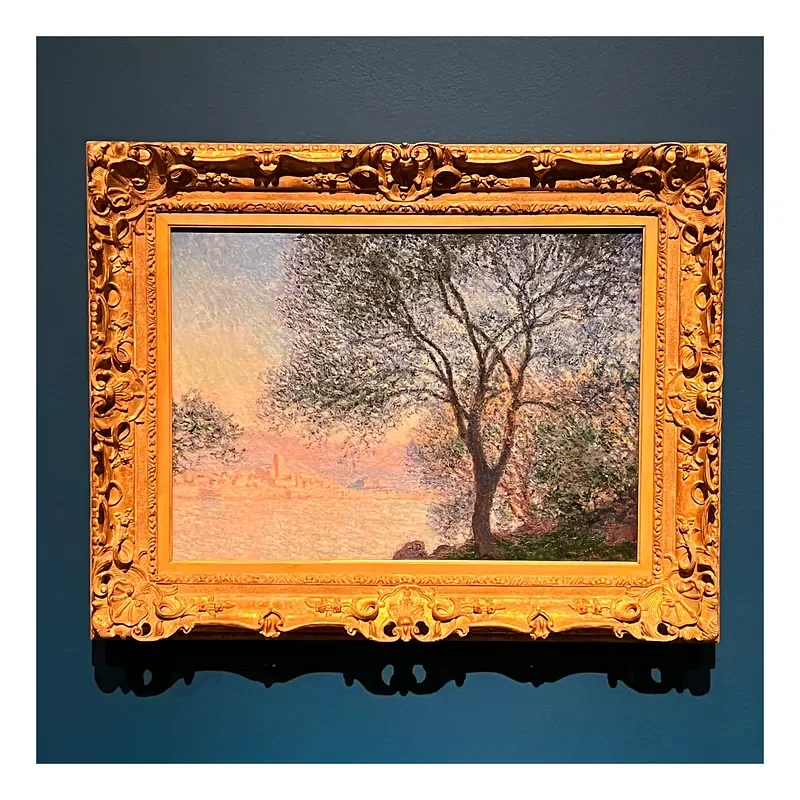
Painting of a tree with sparse leaves next to a body of water, with a colorful sky in the background, in an ornate gold frame.