Leica Standard Again
in Brick Lane, In Spooky Season
An unusual kind of madness can come over a man in mid-October, when the clocks haven't yet gone back but the light has clearly lost interest in the whole enterprise, and, on the back no conspicuous failure at the Guildhall, it was this madness that sent me down Brick Lane on a Saturday evening carrying a camera made in 1932 that has no rangefinder. It’s useful to be clear about that. The Leica Standard does not help you focus. It simply sits there in your hand, small and smug, like a cat that has knocked something off a shelf, and leaves you to guess the distance to your subject by squinting and muttering. To compensate, I had fitted it with a Canon 35mm f/2, a lens from the early sixties so beautifully made that it seems faintly embarrassed to be associated with me, and loaded it with HP5 that I intended to push to 1600, which is photographer-speak for "I have made a series of poor decisions and will be attempting to correct them in the developing tank."
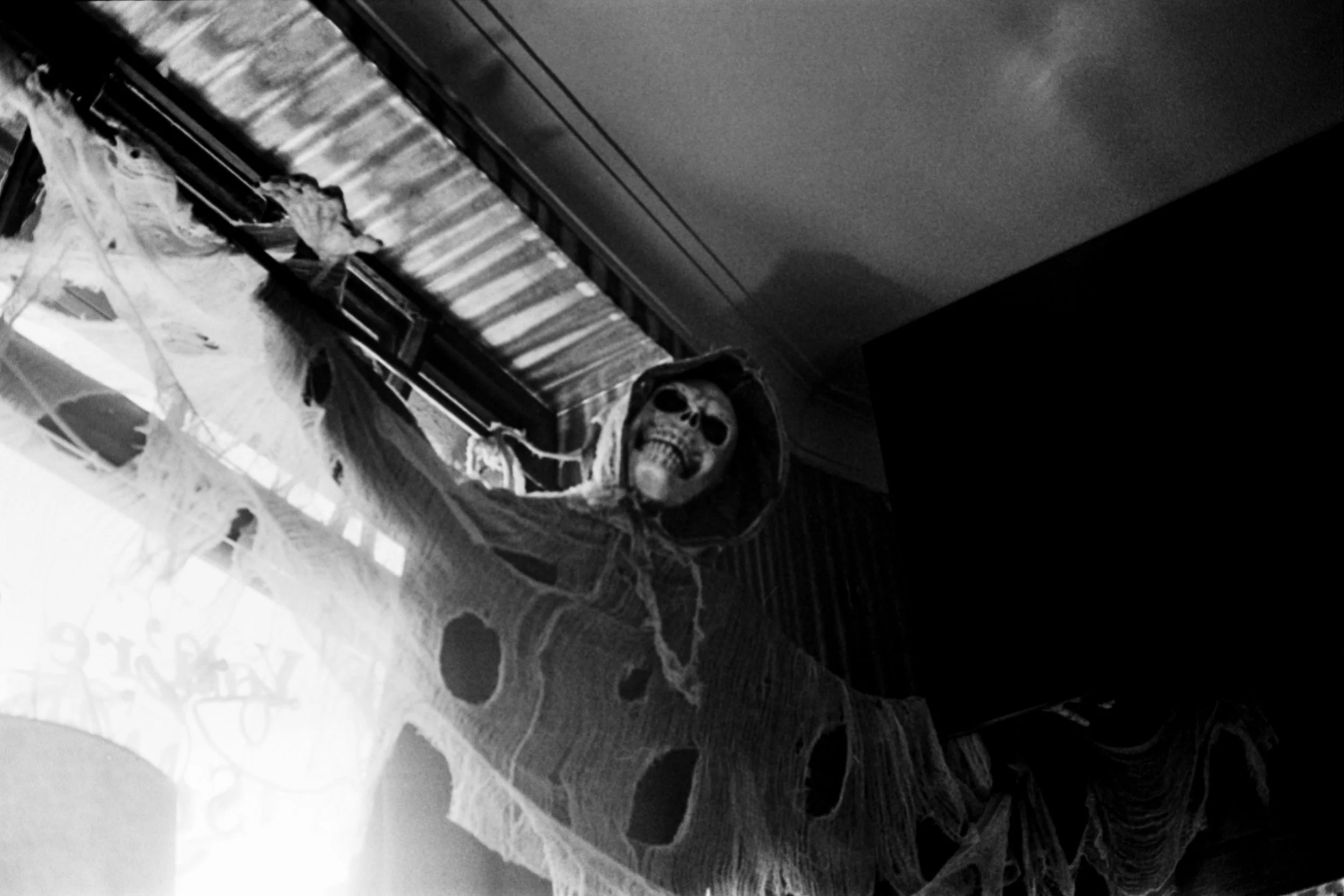
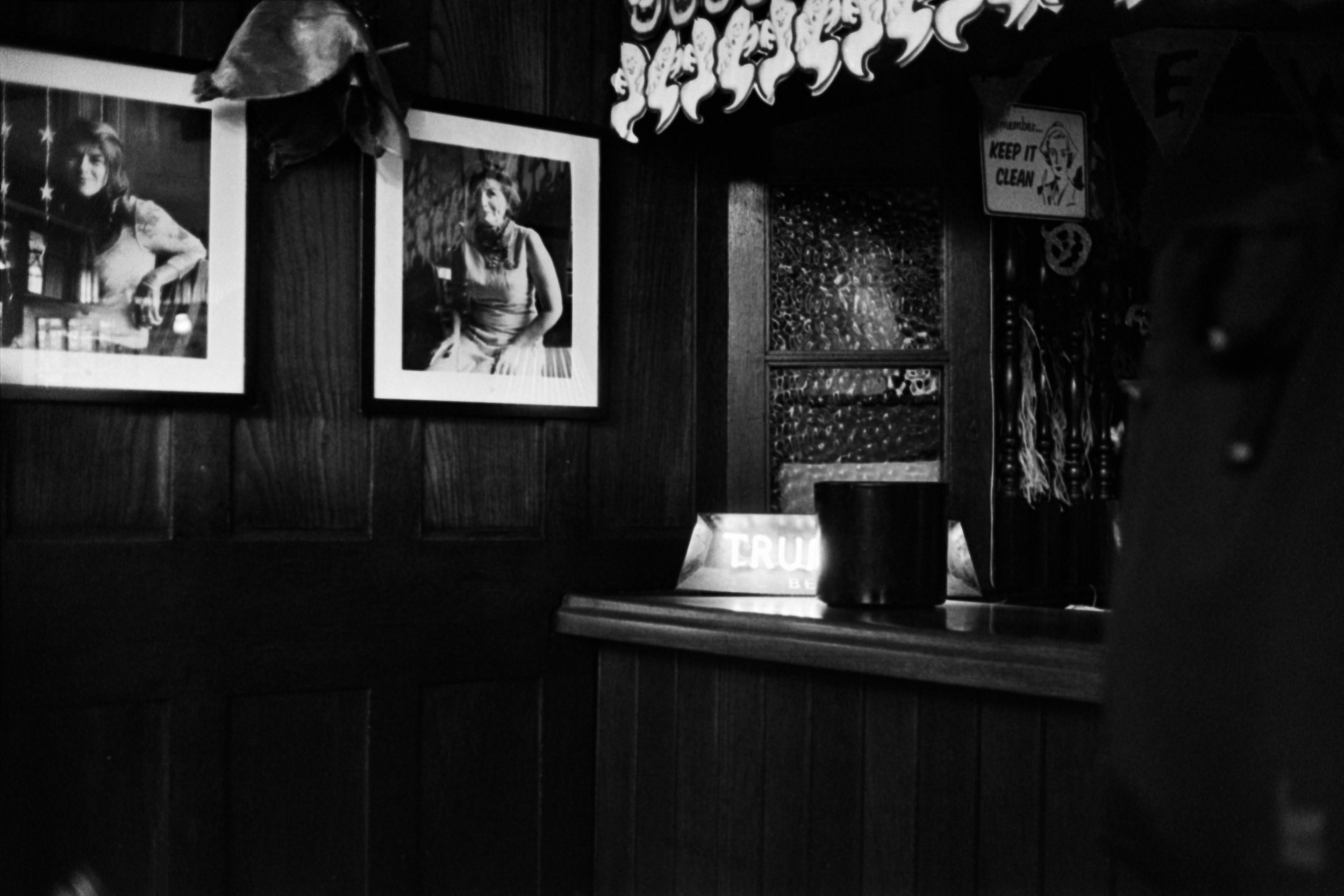
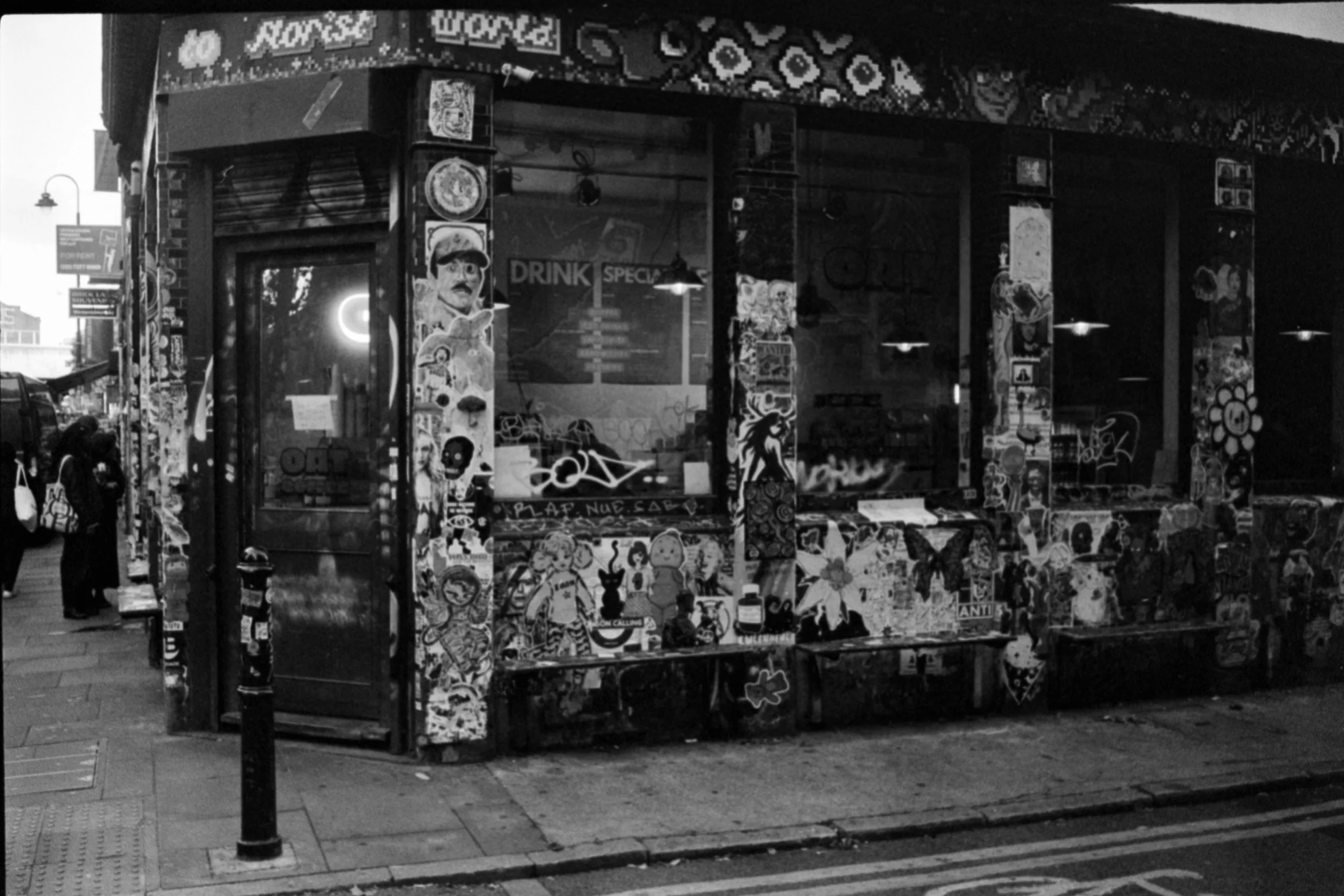
Brick Lane, it turns out, takes Halloween in roughly the same spirit that the British take most things, which is to say half-heartedly and with drink. A curry house had strung a single plastic skeleton above its door, where it dangled at an angle suggesting it had died of disappointment. Outside the Truman Brewery, a group of young people dressed as what I can only assume were sexy cadavers queued for a bar with the grim patience of people waiting for a bus that may or may not exist. Further along, a Jack the Ripper tour shuffled past behind a guide in a top hat, describing Victorian murders with an enthusiasm I found a little unseemly, though I reflected that I was following them at a discreet distance for the pictures, so I was in no position to judge. I set the focus to about three metres, stopped down to f/4, and simply hoped, which is how I approach most things in life, including tax returns.
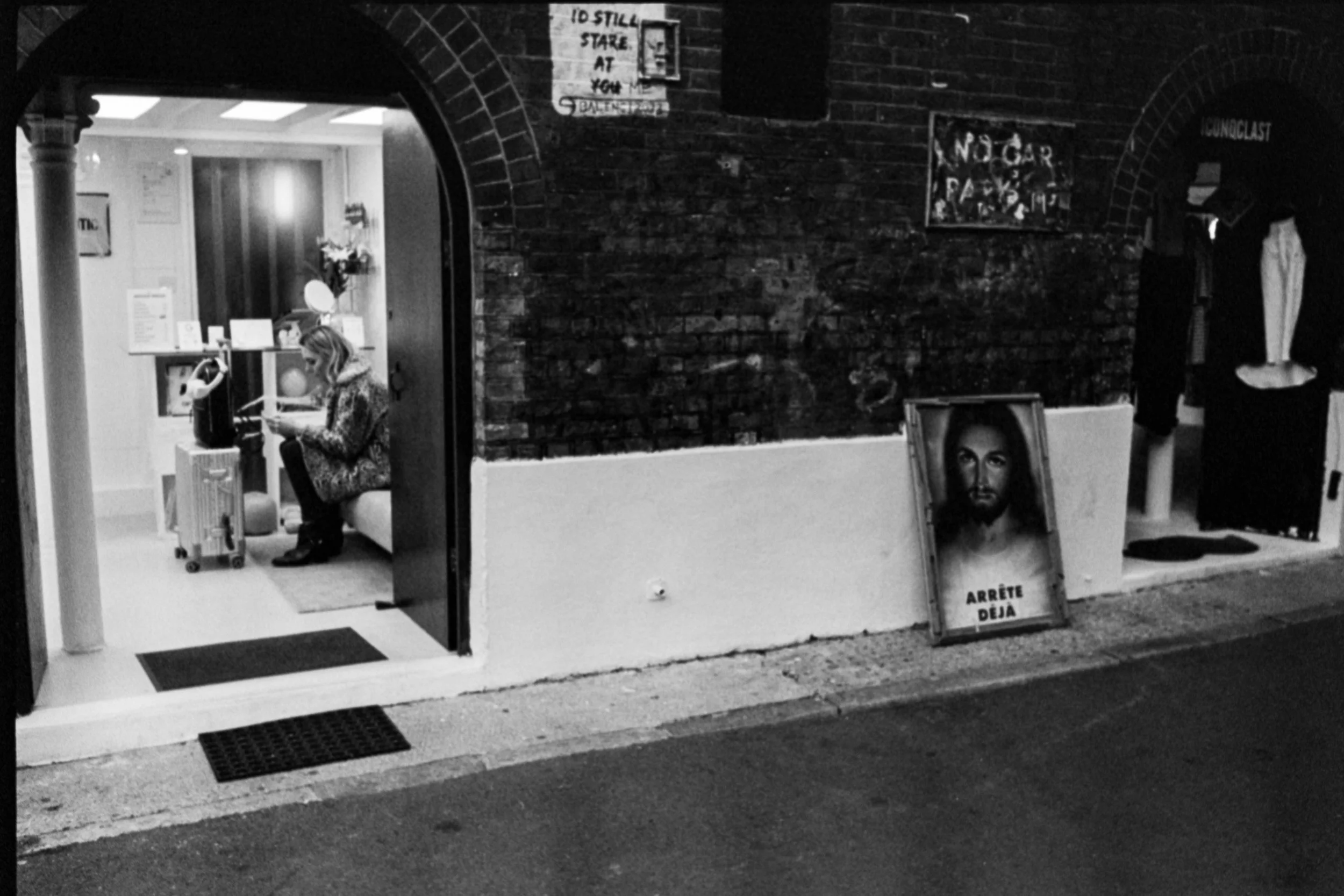
The thing nobody tells you about zone focusing in the dark is how much it resembles fishing: long stretches of standing about looking thoughtful, punctuated by sudden flurries of activity that may or may not have caught anything. I photographed a man in a werewolf mask buying salt beef at Beigel Bake at what felt like a thirtieth of a second, a pumpkin glowing balefully in the window of a vintage shop that wanted £85 for a cardigan, and the wet cobbles of Hanbury Street reflecting the orange of the streetlamps like something out of a film where the person with the camera comes to a sticky end. Whether any of it worked I never know until I've stood in the bathroom with a thermometer and a stopwatch, praying to the gods of ID11. But that, I've come to realise, is rather the point. Anyone can take a sharp photograph of Brick Lane with a telephone. It takes a special kind of fool to do it blind, with a camera older than his grandfather, and to come home feeling like he's had a not unreasonable night out.