Across The River and Into The Vineyard
On The Photography of Inge Morath & Place
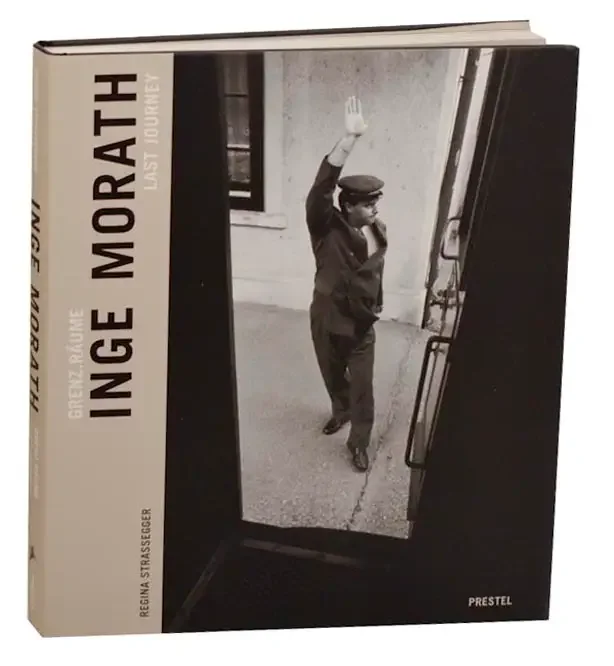
I should say at the outset that I come to Grenz.Räume not as a wide-eyed stranger but as a former student spending time in Graz, which means I know the region the way students know anywhere: intimately, affectionately, and mostly through the bottom of a glass of Schilcher. I spent a good many weekends wobbling down into the southern Styrian hills on the theory that the wine tasted better nearer the source, a theory I tested with real scientific rigour. So it was a peculiar pleasure, and a slightly unnerving one, to find Inge Morath had been there before me, and with a great deal more purpose. Morath was born in Graz, and shortly before her death in January 2002 she travelled through the borderland between southern Styria and Slovenia looking for traces of her family's past. The result is a book that is ostensibly about a place but is really about the peculiar human business of belonging to one, and anyone who has lingered in those hills will recognise it at once.
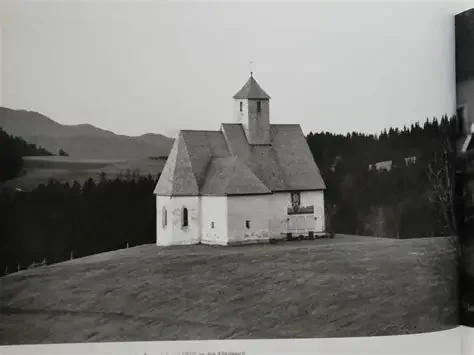
The thing you have to understand about this corner of Europe is that it was perfectly content being one place until somebody decided it should be two. The region, so similar on either side, has a painful history of families and communities torn apart when the Kingdom of Serbs, Croats and Slovenes was carved out of the former Habsburg empire. One day your grandmother lives in Austria; the next, without moving so much as a teacup, she lives somewhere else entirely and needs paperwork to visit her cousins.to use Val Vulpe’s classic line. In Europe the borders come to you. Morath's own family hailed from Slovenj Gradec, in what was then Lower Styria and is now part of Slovenia, so for her the border wasn't an abstraction on a map but a line drawn straight through the family photo album. What makes her pictures so affecting is that she never photographs the border itself — there's nothing much to photograph — but rather the stubborn continuity of life that carries on regardless of it: the farms, the faces, the orchards that plainly have no idea which country they're in and couldn't care less.
This is where Morath's genius for place really announces itself. Lesser photographers, confronted with a landscape this pretty, would have gone straight for the postcard — sunset, vineyard, artfully placed cow — and called it a day. Morath does something cleverer and more patient. She treats the land as a kind of witness, something that has seen empires come and go and has quietly declined to be impressed. Her people are rooted in it like the vines themselves; you get the sense that if you asked any of them where they were from, they would gesture vaguely at the nearest field rather than name a nation. The Slovene photographer Stojan Kerbler accompanied her on the 2001 journey across these border places, and one suspects the presence of a local companion helped her see the region not as a returning celebrity but as someone coming home — a little uncertain, a little nostalgic, and entirely alert.
There is, inevitably, a melancholy to all this, because Morath was making her last journey and, in some sense, must have known it. Working with the film director Regina Strassegger, she fulfilled a long-held wish to revisit the lands of her ancestors, and she died of cancer in a New York hospital before the book and film were completed. Her husband Arthur Miller supplied a foreword, which is rather like having Shakespeare pop in to write the introduction to your holiday snaps. Yet the work never tips into sentimentality. There's a lightness to it, a sort of amused tenderness, as though Morath is gently pointing out how absurd it is that anyone ever thought a line on a map could tell you who a person is. She had photographed half the planet — Spain, Iran, Russia, China — and after all that wandering, the place that seemed to interest her most was the one she'd started from.
And here's the lovely, almost too-neat coda. The armed border guards have since disappeared, and crossing from Austria into Slovenia today is literally like strolling through a vineyard. Which is to say that the landscape won in the end, as landscapes generally do. Grenz.Räume stands as one of the great quiet meditations on sense of place in twentieth-century photography — not because it shows us somewhere spectacular, but because it shows us somewhere ordinary with such attention and affection that it becomes, by the final page, a kind of homeland for the reader too. I still couldn't find it on a map without help. But I'd very much like to go…………….