On Manchester Fire Escapes
I mentioned the Fall, but I think I got away with it…….
Unusual Things
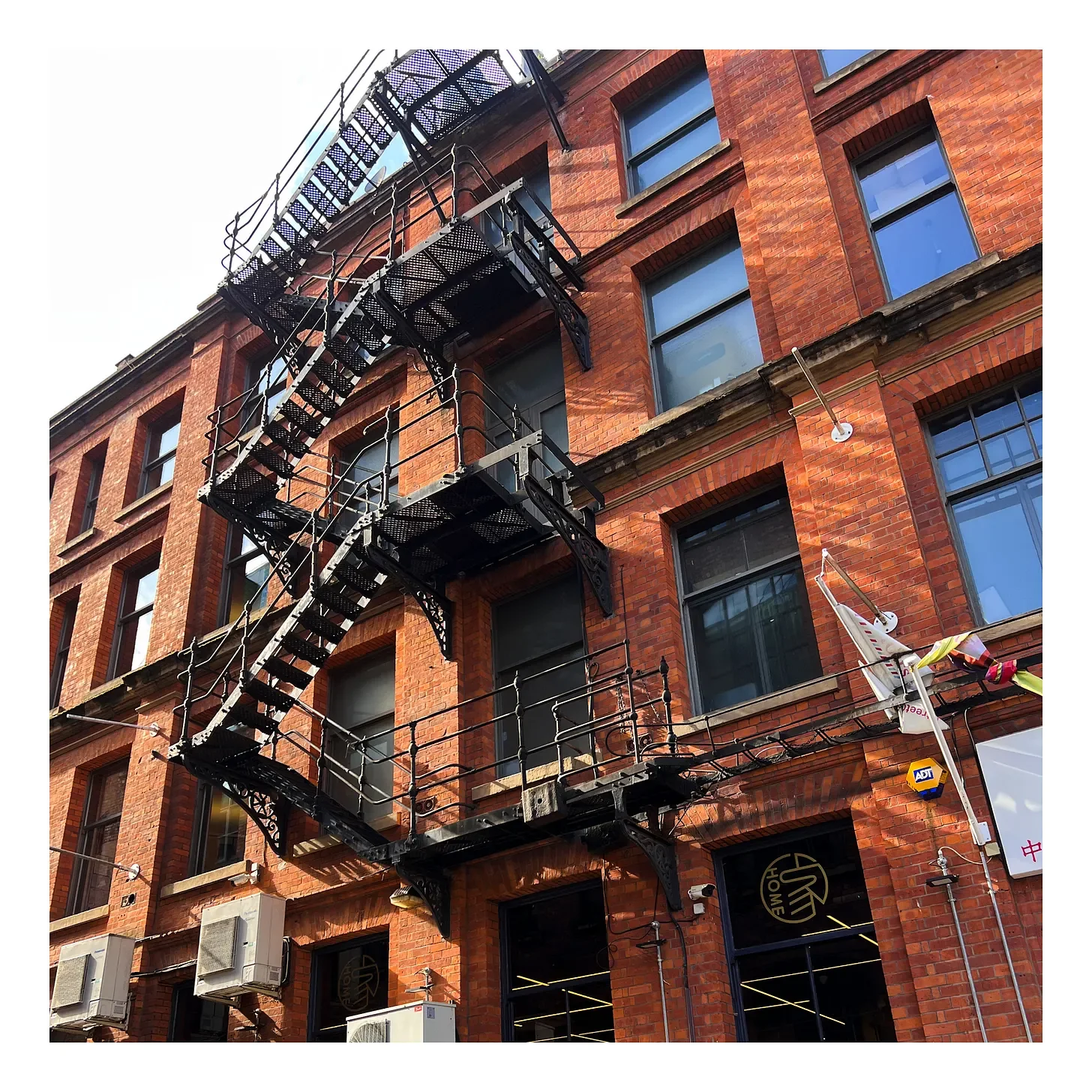
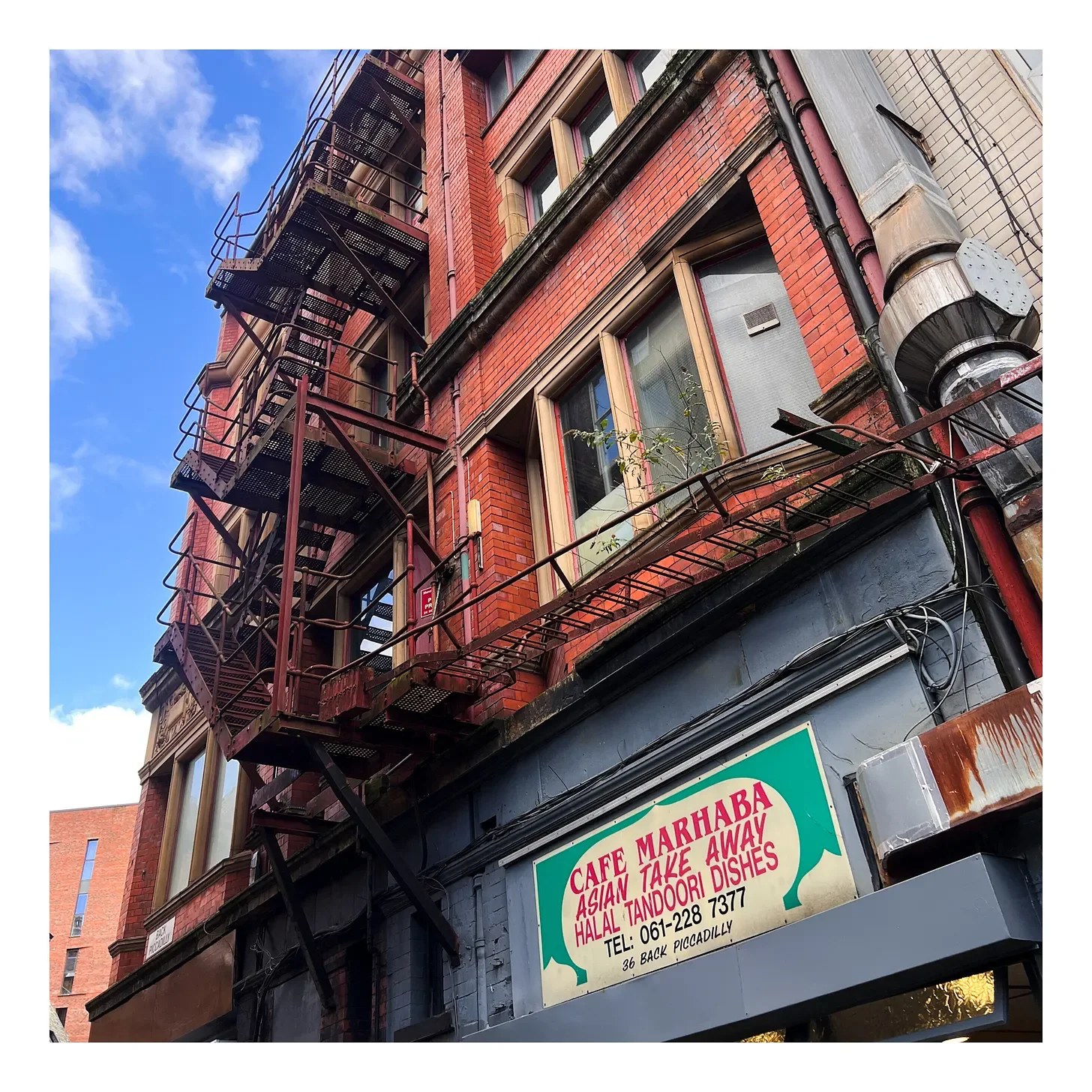
I first noticed it on a damp afternoon in Manchester's Northern Quarter, standing on Dale Street, or possibly Hilton Street, as the drizzle has a way of blurring these distinctions. Above me, clinging to the front of a sooty old warehouse, was a fire escape so perfectly, unmistakably New York that I half expected a man in a vest to lean out and shout something about the Mets. It was a moment of pleasing disorientation, like finding a kangaroo in a Surrey hedgerow.
The explanation, it turns out, isn't that Mancunians secretly longed to be Brooklynites, though I wouldn't rule it out entirely. It's that the two cities, along with Philadelphia, ended up with the same kind of building and then, rather belatedly, the same worry about it. In the nineteenth century all three threw up great hulking commercial blocks, five or six storeys of brick and timber, each with a single wooden staircase inside. They filled them to the rafters with small businesses, frequently in the rag trade, where people sat elbow to elbow among heaps of eminently flammable cloth. Cotton bound Manchester and the American seaboard together, and the builders on both sides of the Atlantic seem to have been reading from much the same book.
For decades nobody gave much thought to what would happen if the staircase caught fire, which is a very human way of approaching things. Then laws arrived. New York began demanding fire escapes on tenements in the 1860s and got considerably more insistent after the Triangle Shirtwaist fire of 1911, a catastrophe so appalling it reshaped American labour law. Britain, meanwhile, passed its Factory and Workshop Acts, which from the 1890s let local councils insist that crowded upper-floor workshops provide a way out that didn't involve jumping. Now, if you are told to add escape routes to an existing brick building and you would very much prefer not to spend any money doing it, there is really only one answer. You bolt iron balconies across the windows, join them with stairs, and dangle a ladder off the bottom. You then counterweight the ladder so it hangs out of reach, because burglars, it emerges, are an international constant.
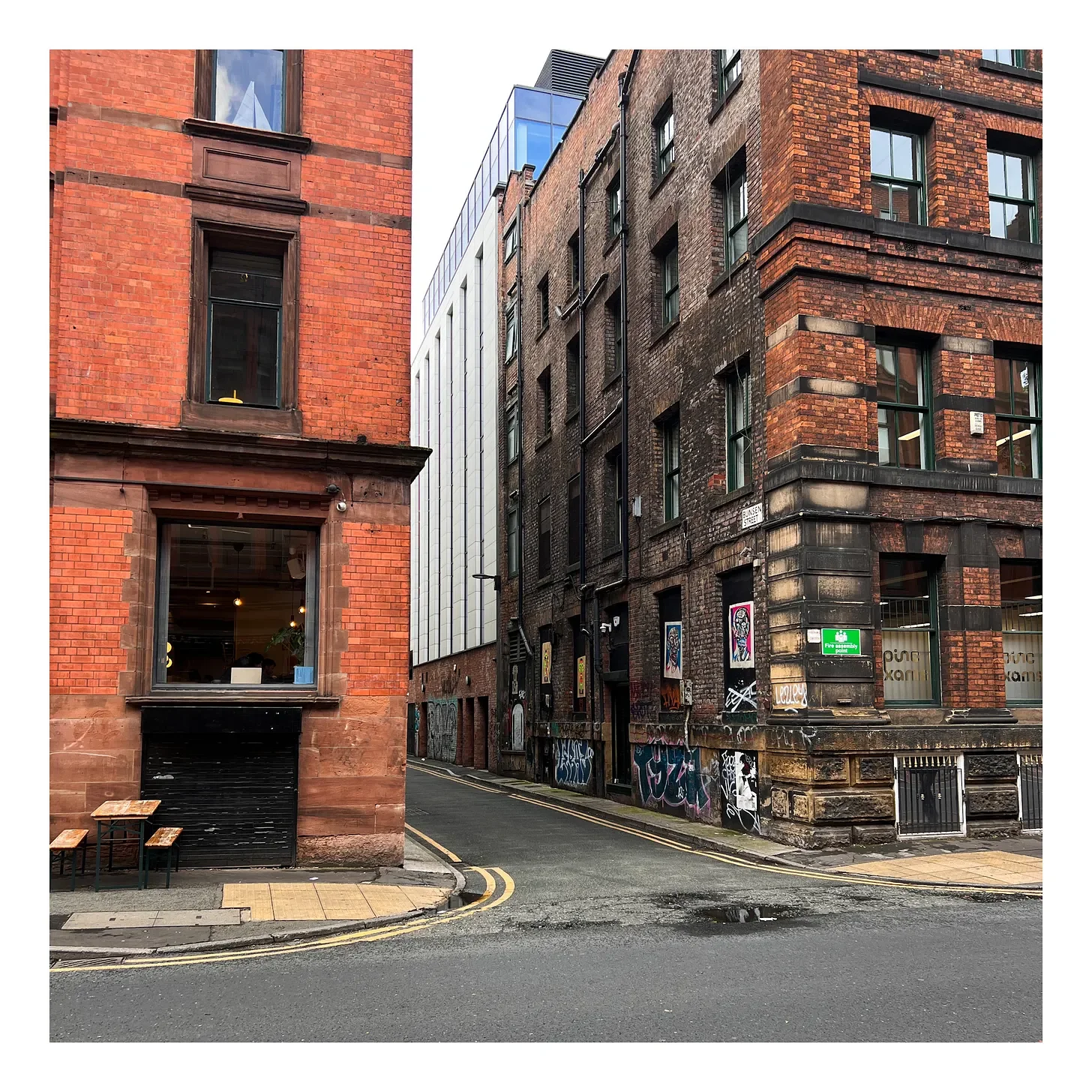
Why they went on the front rather than discreetly round the back comes down to Manchester's cramped plots, which often had no yard worth mentioning. And why so many are still there is thanks, rather wonderfully, to failure. After the war the Northern Quarter slid into a long, shabby decline, and nobody could be bothered to knock anything down, which is how history gets preserved more often than we like to admit.
The resemblance is so good that Hollywood now comes to Manchester to film New York, most famously for Captain America: The First Avenger. Some of the ironwork you see on screen was added by set designers, which strikes me as gilding the lily, or at any rate rusting it. But much of it is genuine. And there is something rather lovely in the idea that Manchester can pass for Manhattan simply because nobody got round to tidying up.